
15 Custom Software Development Ideas to Eliminate Manual Work (Small Business Edition)

Manual work is killing your profit margin.
Every hour your team spends on repetitive tasks is an hour they're not growing your business. The math is brutal: inefficient workflows can cost small businesses up to 30% of their annual revenue. That's not a typo.
Custom software development isn't just for enterprise companies anymore. Small businesses are discovering that purpose-built automation tools deliver ROI that generic platforms can't touch: sometimes as high as 290%.
Here are 15 custom development ideas that eliminate manual work and give you back control of your operations.
Internal Operations That Run Themselves
1. Tailored CRM Systems
Generic CRMs force you to adapt your process to their limitations. Build backwards.
A custom CRM solution maps directly to your sales workflow, captures the data points that actually matter to your business, and eliminates the features you'll never use. No more paying for bloatware. No more training staff on unnecessary complexity.
The result? Your team actually uses it.
2. Automated Employee Management
Timesheets. Payroll approvals. Attendance tracking. PTO requests.
These tasks consume administrative bandwidth that should be spent on strategic work. Custom software development creates one unified system where employees clock in, managers approve with a single click, and payroll processes automatically.
Zero manual data entry. Zero errors.

3. Intelligent Inventory Management
Manual stock counts are outdated the moment you finish them.
Custom inventory automation monitors stock levels in real-time, triggers reorder workflows when thresholds are hit, and integrates directly with your suppliers' systems. Some businesses using Airtable automation for inventory have cut ordering cycles from days to hours.
Your products never sit idle. You never run out.
4. Focused ERP Solutions
Enterprise Resource Planning sounds intimidating. It doesn't have to be.
Instead of implementing a massive system with modules you'll ignore, build a lean ERP that connects only your core functions: accounting, HR, inventory. It becomes the single source of truth for your operations without the enterprise price tag.
5. Policy-Driven Expense Management
Expense approvals shouldn't require three email threads and a spreadsheet.
Custom expense automation enforces your spending policies at the point of submission. Compliant expenses? Auto-approved. Out-of-policy spending? Flagged instantly with specific reasons. Your finance team reviews exceptions, not every receipt.
6. Smart Document Workflows
Email chains for approvals create bottlenecks and confusion.
Build document routing that knows your org chart. Contracts automatically flow to the right stakeholders based on value thresholds, department, or document type. Approvers get notifications. You get visibility. Nothing falls through the cracks.
Customer-Facing Systems That Scale
7. Custom E-Commerce Platforms
Off-the-shelf e-commerce works until it doesn't.
Custom software development for online sales means checkout flows optimized for your specific customer journey, product configurations that match your catalog structure, and integrations with your existing business systems. Some businesses see conversion increases of 10-20% simply by removing friction points generic platforms create.

8. Self-Service Client Portals
Every customer service call costs time and money.
A custom portal lets clients check order status, download invoices, update account information, and access resources without involving your team. The workflow automation handles routine requests autonomously while you focus on complex customer needs.
9. Automated Lead Nurturing
Prospects don't want to wait for office hours.
Marketing automation AI keeps leads engaged with personalized content, scores them based on behavior, and notifies sales when they're ready to buy. The entire nurturing sequence runs without manual intervention. Your sales team talks to qualified prospects, not tire-kickers.
10. Zero-Touch Invoicing
Billing shouldn't require manual data entry from three different systems.
Custom invoice automation pulls data from your CRM, project management, and time tracking systems, generates accurate invoices, sends them to clients, and tracks payment status. Late payment? Automated reminders. The entire billing cycle runs on autopilot.
Data & Intelligence Systems
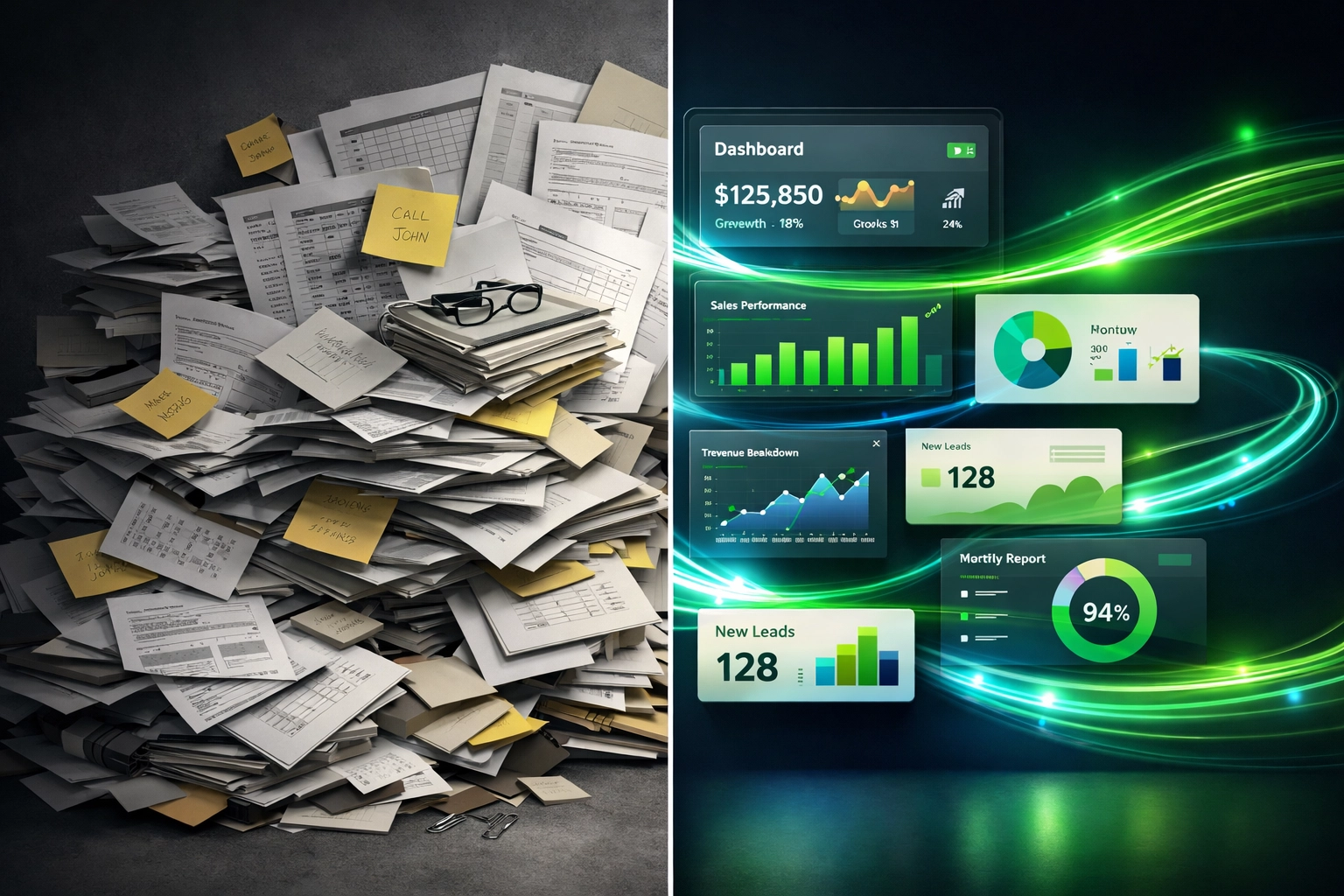
11. Live Analytics Dashboards
Monthly reports are historical documents by the time you read them.
Real-time dashboards built with business process automation aggregate data from all your systems and surface actionable insights immediately. Set thresholds and receive alerts when metrics hit critical levels: revenue targets, inventory shortages, customer churn signals.
You make decisions with current data, not outdated snapshots.
12. Centralized Data Management
Fragmented data creates duplicate work and conflicting information.
A unified data platform connects your disconnected systems and creates one authoritative database. Sales, operations, and finance all work from the same information. AI integration services can even clean and standardize data automatically as it flows between systems.
Advanced Automation Capabilities
13. System Integration Architecture
Your business probably runs on 5-10 different applications that don't talk to each other.
Custom integration development connects legacy systems, third-party apps, and modern platforms through APIs and data pipelines. N8n automation and similar tools create workflows that move data between systems automatically. A sale in your CRM triggers inventory updates, creates shipping labels, and updates accounting: all without human intervention.
No more manual data transfer. No more version control issues.
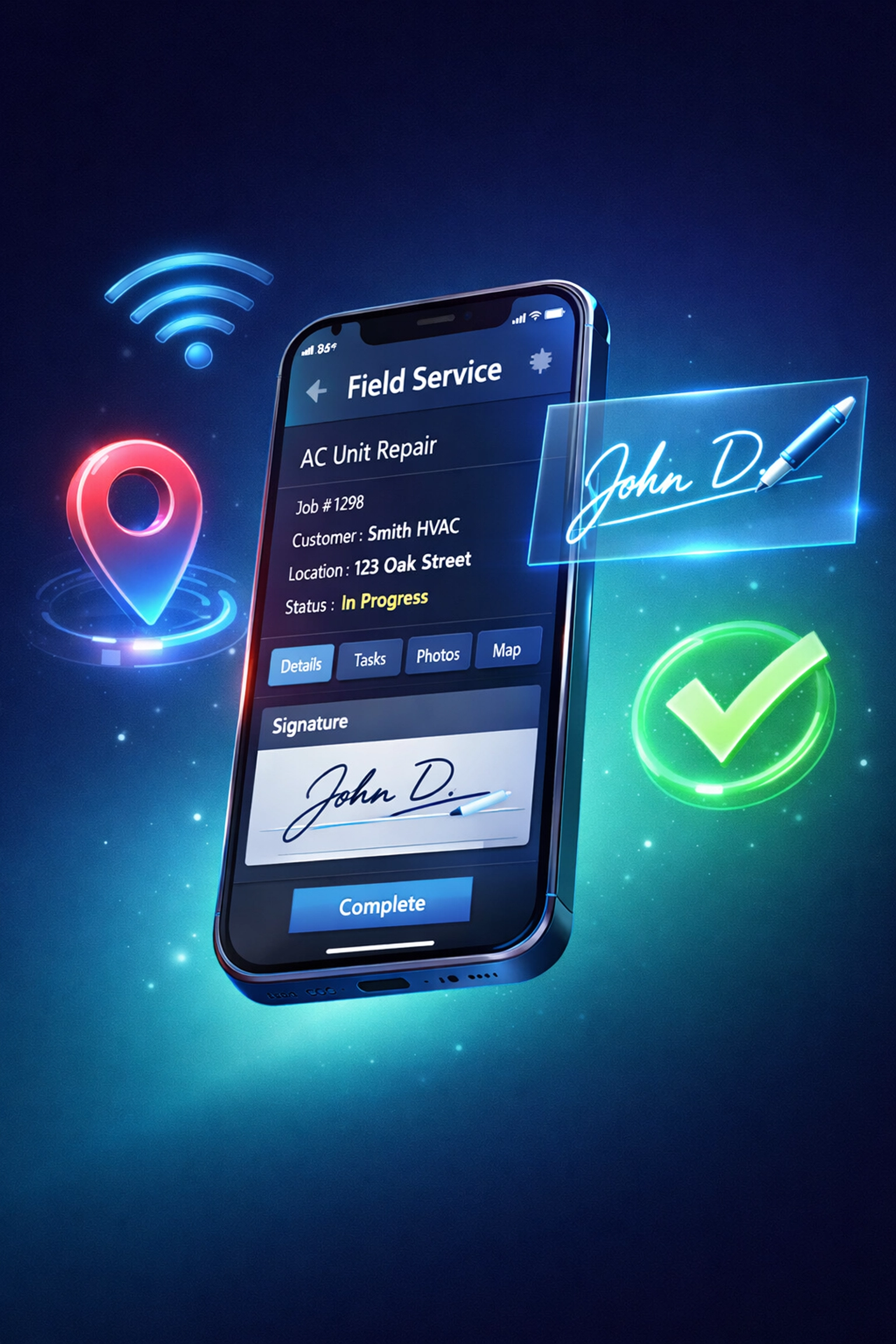
14. Field-Ready Mobile Applications
Your field team shouldn't need to return to the office to update systems.
Custom mobile apps for iOS and Android let remote workers access customer data, update job status, capture signatures, and process payments on-site. Everything syncs automatically when they reconnect. Your customers get faster service. Your team stays productive anywhere.
15. Visual Workflow Studios
The most powerful automation is the kind you can modify yourself.
Low-code workflow builders let non-technical team members create automations using visual interfaces. Trigger actions based on time, task completion, or custom logic without writing code. As your business evolves, your automation evolves with it: without waiting on developers for every change.
The Implementation Reality
Custom software development doesn't mean betting the company on an 18-month project.
Start with an MVP: Minimum Viable Product. Pick the manual process that causes the most pain. Build a focused solution. Validate it. Then expand.
This approach spreads costs over time and proves ROI before major investment. Many businesses begin with automation consulting to identify high-impact opportunities and build implementation roadmaps.
Your Next Move
Manual work compounds. Every day you wait is another day of inefficiency multiplying across your organization.
The businesses winning in their markets aren't necessarily the ones with the biggest budgets. They're the ones that eliminated manual bottlenecks and freed their teams to focus on what actually drives growth.
Which of these 15 ideas would transform your operations? Start there. Automate business processes that waste time today. Build systems that scale tomorrow.
Your competitors are probably still doing things manually. That's your window.
