
Boost Your Revenue Instantly with These 5 Marketing Automation AI Tips (No Tech Degree Required)

You're leaving money on the table. Every day.
Not because your product isn't good enough. Not because your team isn't working hard. But because you're still doing manually what marketing automation AI can handle in seconds: with better results.
The gap between businesses leveraging AI automation and those that aren't? It's getting wider. Fast. And the beauty of it? You don't need a computer science degree to close that gap.
Here's the truth: Most small to medium businesses are drowning in repetitive tasks that kill productivity. Following up with leads. Sending emails. Qualifying prospects. These activities drain resources while your competitors automate their way to higher revenue.
Let's fix that. Here are five actionable ways to deploy marketing automation AI and start seeing results this week.

1. Let AI Score Your Leads (Stop Chasing Dead Ends)
Your sales team is wasting time on leads that will never convert.
AI-powered lead scoring changes that. The system analyzes prospect behavior: website visits, email opens, content downloads, social media engagement: and assigns a numerical score to each lead. High scores mean high intent. Low scores mean they're not ready yet.
What this does for your revenue: Your team focuses exclusively on prospects who are ready to buy. No more cold calling people who downloaded one ebook six months ago. No more treating every inquiry the same.
The implementation is simple. Modern workflow automation platforms can integrate with your existing CRM and track engagement automatically. When someone hits your threshold score, they get routed directly to sales. When they're not ready, they stay in nurture sequences until they heat up.
The result? Faster sales cycles. Higher conversion rates. More closed deals with the same team size.
2. Automate Personalized Email Sequences (Scale Your Follow-Up)
You know personalized emails work. You've seen the stats. But manually personalizing emails for hundreds of leads? That's not happening.
AI solves this by creating targeted email campaigns based on prospect demographics, behavior, and position in the buyer journey. The system automatically selects the right message, adjusts the timing, and sends follow-ups based on engagement.
Here's what changes: Every lead gets the right message at the right time without your team lifting a finger. Someone downloads a pricing guide? They get educational content about ROI. Someone visits your case studies page three times? They get a demo invitation.
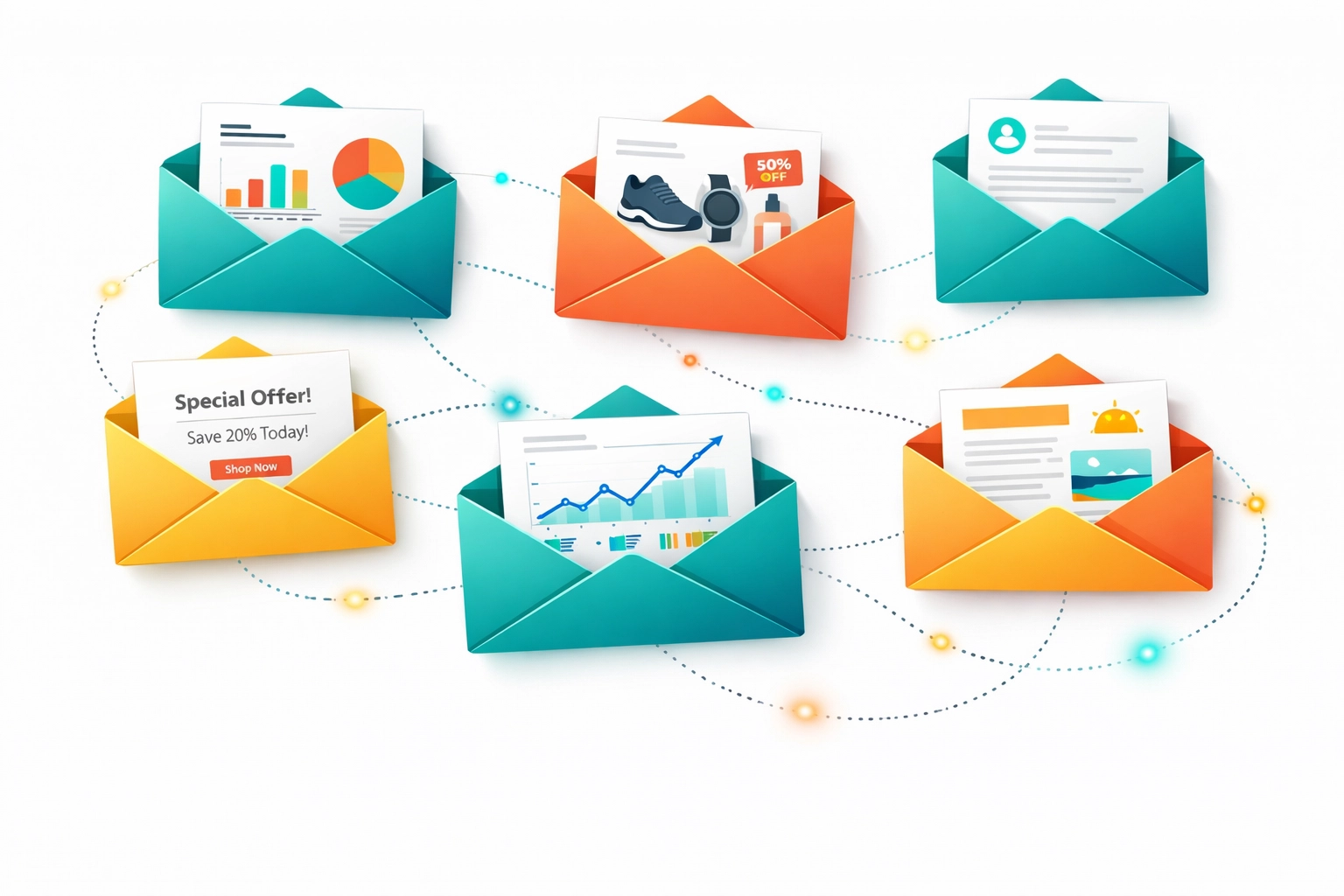
This isn't batch-and-blast email. This is intelligent sequencing that adapts to each prospect's behavior. Open rates increase. Response rates climb. And your team stops spending hours crafting individual emails.
The setup takes days, not months. Connect your email platform to your automation system, create your message library, and define your triggers. The AI handles the rest: including the optimal send times for each recipient.
3. Deploy AI Chatbots for 24/7 Engagement (Never Miss a Lead)
Your website visitors don't care that it's 11 PM or Sunday morning. They have questions now.
AI chatbots engage visitors instantly, answer common questions, qualify leads, and capture contact information: all without human intervention. They're on duty when your team isn't. And unlike tired employees, they're consistently friendly and accurate.
The revenue impact: Leads that would have bounced get captured. Questions that would have gone unanswered get resolved. Qualified prospects get routed to sales immediately instead of sitting in a contact form queue for 24 hours.
Modern chatbots don't sound like robots anymore. They use natural language processing to understand intent and respond conversationally. They can schedule meetings, provide pricing information, and even handle basic objections.
The implementation is straightforward. Most chatbot platforms integrate with your website in minutes. You train the bot with your FAQs, connect it to your calendar for scheduling, and set rules for when to escalate to a human.
Pro tip: Don't try to make the chatbot do everything. Let it handle qualification and information gathering. Let your team handle the relationship building and closing.

4. Set Up Automated Follow-Up Reminders (Stop Dropping Balls)
Leads fall through the cracks. It happens. Your team gets busy, priorities shift, and that promising prospect from last week gets forgotten.
Automated follow-up systems eliminate this problem. The AI tracks every lead interaction and automatically sends follow-ups at optimal intervals. If a lead hasn't responded in three days, they get a check-in. If they engaged with your content but didn't book a call, they get a gentle nudge.
Why this matters for your bottom line: Every dropped lead is lost revenue. Research shows that responding to leads within the first five minutes increases conversion likelihood by 400%. But consistency matters even more than speed. The companies that follow up methodically win more deals than companies that respond fast but forget to follow up.
Your automation system can handle this entirely. Set your follow-up cadence, write your templates, and let the system execute. It'll send reminders at the right time, through the right channel, with the right message.
The best part? Your team gets notifications when leads show renewed interest, so they can jump in at the perfect moment. That's the combination that drives revenue: automated consistency with human intervention at high-value moments.
5. Track Key Metrics and Continuously Optimize (Stop Guessing)
You can't improve what you don't measure.
AI analytics track everything: conversion rates, email open rates, response times, cost per acquisition, customer lifetime value. But more importantly, they identify patterns human analysts would miss. Which subject lines perform best? What time of day yields the highest engagement? Which lead sources convert at the highest rate?
The revenue multiplier effect: Every optimization compounds. Increase your email open rate by 5%, your conversion rate by 3%, and your average deal size by 8%: suddenly you're looking at 16% revenue growth without adding headcount or marketing budget.
Start with baseline metrics. Where are you now? Then implement your automation improvements one at a time. Measure the impact. Refine. Deploy the next improvement.

Modern AI analytics platforms visualize your entire marketing funnel and highlight bottlenecks automatically. They'll tell you exactly where leads are dropping off and suggest fixes based on data from similar businesses.
The Integration Piece Everyone Misses
Here's the critical point most businesses overlook: These five tactics only work when your systems talk to each other.
Disconnected tools create information silos. Your email platform doesn't know what your CRM knows. Your chatbot doesn't share data with your lead scoring system. Your analytics can't see the full picture because the data is fragmented.
The fix: Integrate everything. Use automation platforms that connect your existing tools and ensure data flows seamlessly between them. When your CRM, email platform, chatbot, and analytics work as one unified system, the AI gets smarter and your automations become more effective.
At Yotomations, we specialize in business process automation that connects your entire tech stack without requiring you to rip and replace your existing tools. We make your systems communicate so you get the compound benefits of integrated AI automation for small business.
Start Simple, Scale Smart
Don't try to implement all five tips simultaneously. That's a recipe for overwhelm and abandoned projects.
Pick one. The one that addresses your biggest bottleneck. Implement it properly. Measure the results. Then add the next piece.
Most businesses see measurable ROI within the first month when they focus on execution rather than trying to boil the ocean.
The companies winning with marketing automation AI aren't the ones with the most sophisticated systems. They're the ones that executed consistently on the fundamentals and let the results compound.
Your competitors are already automating. The question isn't whether to start. It's whether you can afford to wait another quarter while they capture market share with systems that work around the clock.
Ready to stop leaving revenue on the table? Let's talk about your specific situation and identify which automation opportunities will drive the fastest results for your business.
