
AI Integration Services 101: A Beginner’s Guide to Mastering Marketing Automation AI
Your marketing team is drowning in repetitive tasks. Your sales reps are chasing lukewarm leads. Your customer data lives in seventeen different places, and nobody has time to make sense of it all.
Sound familiar?
Marketing automation AI isn't just another buzzword: it's the difference between businesses that scale efficiently and those that burn out trying. While your competitors are still manually segmenting email lists at 11 PM, AI-powered systems are already optimizing campaigns, scoring leads, and personalizing customer experiences in real-time.
Let's cut through the noise and talk about what AI integration services actually mean for your business.
What Marketing Automation AI Actually Does
Marketing automation AI uses machine learning and predictive analytics to handle decisions that used to require hours of manual work. Instead of guessing which customers might churn or which leads deserve attention, the system analyzes patterns across thousands of data points and tells you exactly what to do next.
The technology operates in four critical phases:
Data Aggregation : Your CRM, social media platforms, ad accounts, web analytics, and e-commerce systems all speak different languages. AI pulls everything into one unified source of truth so you're not making decisions based on incomplete information.
AI-Powered Analysis : Machine learning models identify behavioral patterns you'd never spot manually. Which customers are about to cancel? Which leads are ready to buy? What content actually drives conversions? The system answers these questions automatically.
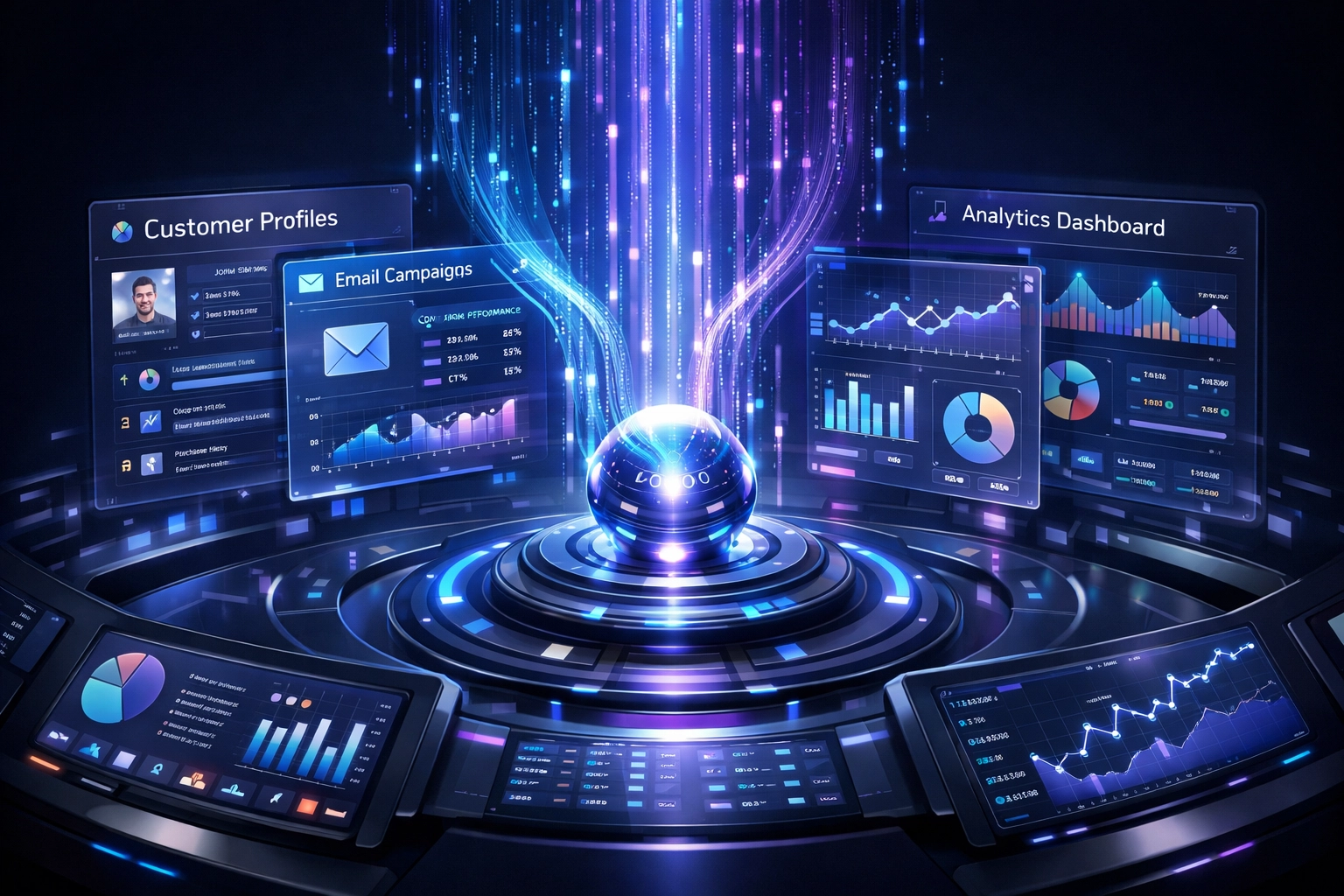
Automated Execution : Based on those insights, the AI triggers personalized campaigns, adjusts advertising budgets in real-time, serves dynamic content to each visitor, and alerts your team when high-value opportunities emerge.
Continuous Optimization : Every campaign becomes training data. The system measures results, refines its models, and gets smarter with zero human intervention required.
This isn't about replacing your marketing team. It's about multiplying their effectiveness by eliminating the grunt work that kills productivity.
The Technologies Driving Real Results
Machine learning analyzes your historical marketing data to predict future outcomes. Which subject lines will get opened? Which product recommendations will convert? The system learns from every interaction and continuously improves its accuracy.
Predictive analytics goes beyond simple reporting. Research shows it can improve customer retention by 27% and boost cross-selling success by 20%. Instead of reacting to problems after they happen, you're preventing them before they start.
Workflow automation connects your entire tech stack. When a lead downloads a whitepaper, the system automatically scores them, adds them to the right nurture sequence, notifies the sales rep, and schedules a follow-up: all without anyone touching a keyboard.
Companies using these AI integration services save an average of 2.5 hours per day per marketer. That's over 600 hours annually per team member redirected toward strategy instead of busywork.
Applications That Transform Your Marketing Operations
Advanced Segmentation : Forget basic demographic filters. AI analyzes hundreds of behavioral variables to create micro-segments based on purchase patterns, content engagement, browsing behavior, and predicted lifetime value. You're not just targeting "small business owners": you're targeting "SaaS founders who read comparison content, engage on LinkedIn, and typically convert after three touchpoints."
Personalized Content Delivery : Every email, landing page, and product recommendation gets tailored to the individual recipient. The system knows what time they're most likely to open emails, what content format they prefer, and which products complement their previous purchases. Personalization at scale, with zero manual effort.
Predictive Campaign Optimization : Before you spend a dollar, the AI forecasts expected ROI across different channel mixes and audience segments. During the campaign, it automatically reallocates budget from underperforming channels to winners. You're making data-driven decisions in real-time instead of waiting for monthly reports.
Automated Multi-Channel Workflows : A prospect visits your pricing page but doesn't convert. The system automatically sends a targeted email, shows them retargeting ads highlighting customer testimonials, notifies your sales team with context about their journey, and schedules a personalized demo invitation. Every touchpoint is coordinated across channels without manual coordination.
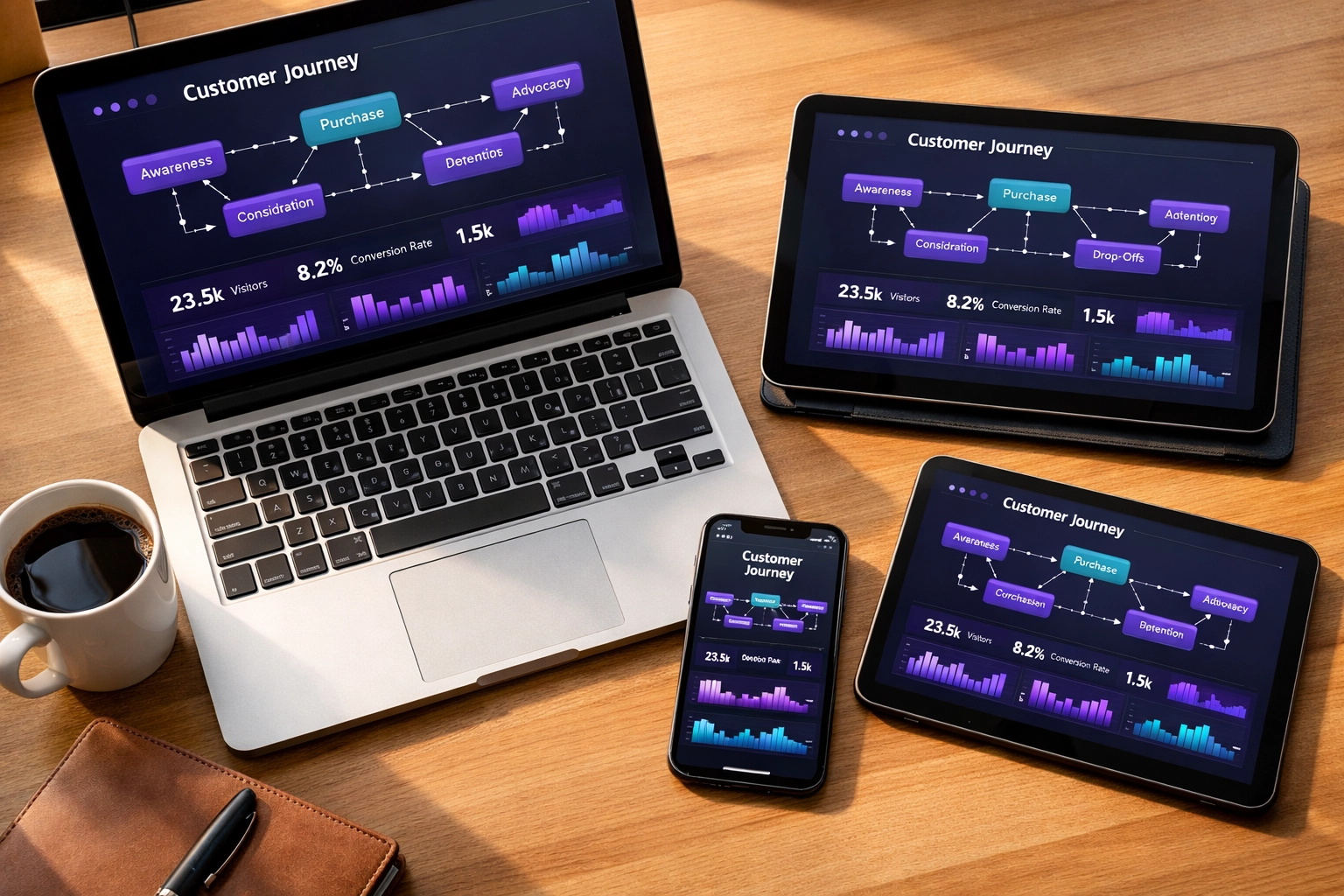
Customer Journey Mapping : Track how individual prospects move through your funnel across email, social media, website visits, and offline interactions. The AI identifies which touchpoints drive conversions and which create friction, then automatically optimizes the journey for better results.
Your Implementation Roadmap
Most businesses fail at marketing automation AI because they try to automate everything at once. That's a recipe for chaos.
Start with structure.
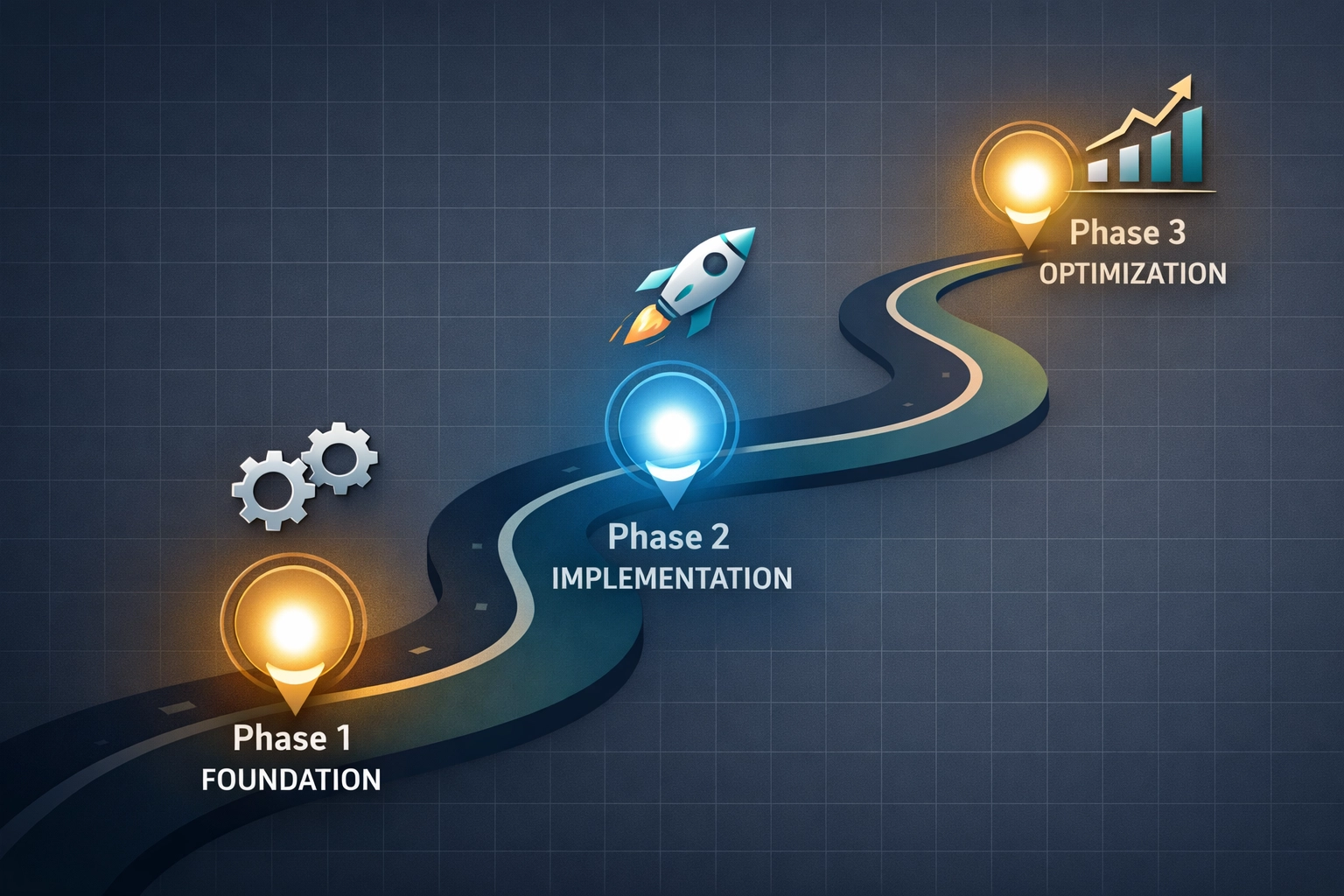
Phase 1: Foundation (Months 1-2)
Audit your current data collection. Where does customer information live? What's accurate? What's missing? Define clear success metrics that go beyond "efficiency": focus on revenue impact, conversion rates, and customer lifetime value.
Pick one high-impact use case. Not five. One. Maybe it's predictive lead scoring that helps sales focus on ready-to-buy prospects. Maybe it's automated email sequences that nurture leads without manual intervention. Choose something that delivers measurable results quickly.
Phase 2: Implementation (Months 3-4)
Deploy AI tools with human oversight. You're not flipping a switch and walking away: you're establishing feedback loops that let your team validate AI decisions and correct course when needed.
Train your team on AI collaboration. They need to understand what the system can do, where it needs guidance, and how to interpret its recommendations. Workflow automation only works when your people know how to leverage it.
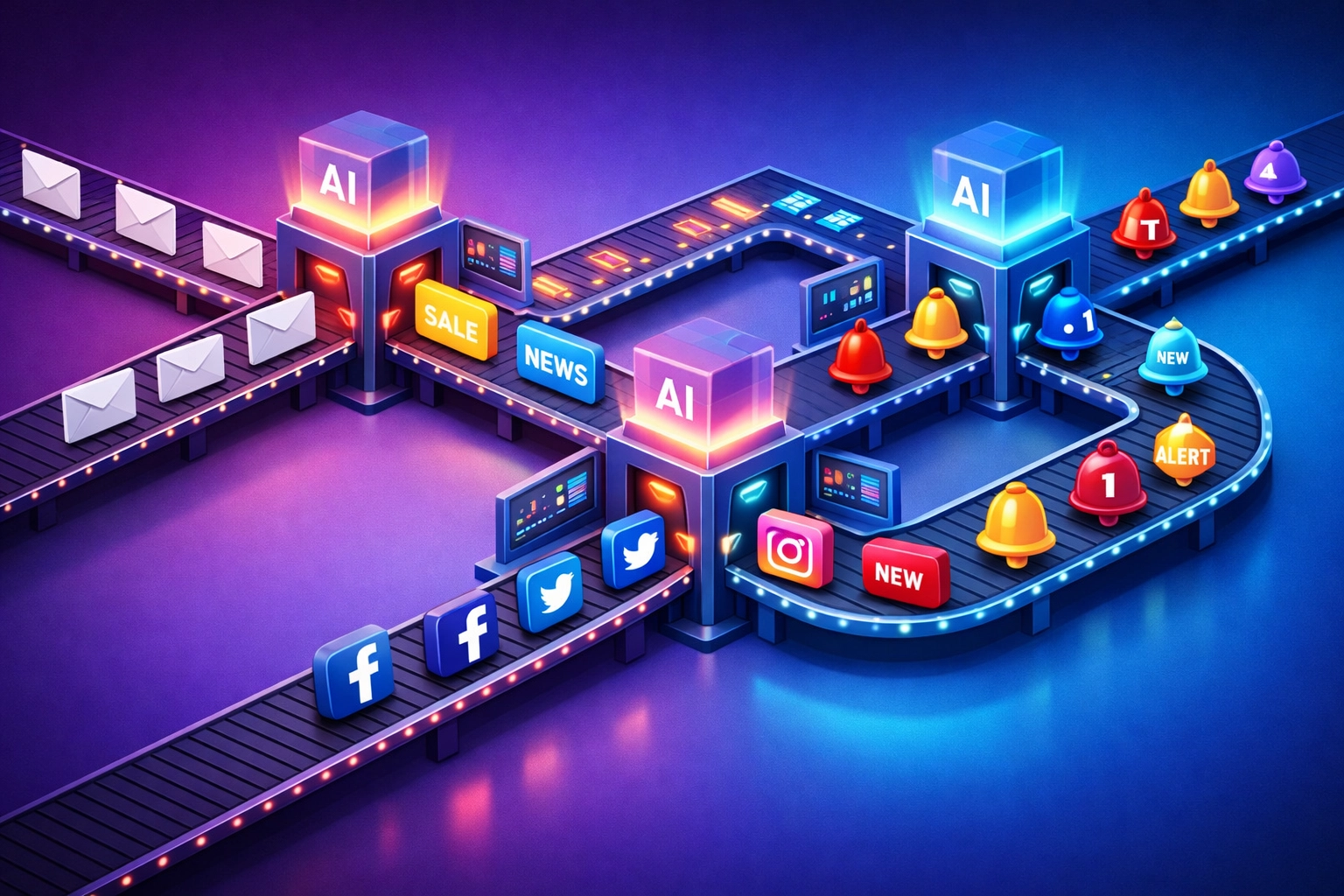
Tools like n8n automation and Airtable automation give you the flexibility to build custom workflows that fit your specific business processes without expensive custom development. These platforms connect your existing tools and let you automate complex sequences without writing code.
Phase 3: Optimization (Months 5-6)
Scale what works. The AI has learned your audience patterns, your team understands the system, and you've proven ROI on your initial use case. Now you expand to additional applications.
Integrate AI insights into broader strategy. The predictive models aren't just automating tasks: they're revealing opportunities and risks your team should address at the strategic level.
Measure ROI across both cost savings (hours saved, reduced errors) and performance improvements (higher conversion rates, increased revenue, better retention).
Getting Started with AI Integration Services
You don't need a massive budget or a data science team to implement marketing automation AI. You need clarity on what problem you're solving and expertise to implement it correctly.
Automation consulting helps you identify the highest-impact opportunities in your specific business. An expert assessment reveals where automation delivers immediate ROI versus where you'd be automating the wrong things.
For AI automation for small business, the key is starting focused. One automated workflow that saves your team 10 hours per week and improves results is worth more than a comprehensive system that nobody understands how to use.
The technology is accessible. The custom software development required is minimal when you use modern integration platforms. What matters is strategy: knowing which processes to automate, how to structure your data, and how to train your team on the new capabilities.
Your Next Move
Marketing automation AI isn't coming: it's already here. Your competitors are implementing it. Your customers expect the personalized experiences it enables.
The question isn't whether to adopt AI integration services. The question is whether you'll lead or follow.
Start with one high-impact use case. Automate business processes that create bottlenecks today. Measure results. Scale what works. That's how you build business process automation that transforms operations instead of creating expensive complexity.
Ready to explore what marketing automation AI could do for your business? Connect with our team to discuss your specific challenges and opportunities. We'll show you exactly where AI integration delivers the biggest impact for your operations.
