
Custom Software Development vs Workflow Automation: Which Is Better For Your Small Business Budget?
You're staring at two quotes on your desk. One's for custom software development: $75,000, maybe more. The other? Workflow automation for $25,000. Both promise to solve your business process headaches.
Which one actually delivers without draining your bank account?
Let's cut through the sales pitches and look at what your small business budget actually needs.
The Custom Software Trap: Hidden Costs That Kill Budgets
Custom software development sounds impressive. Bespoke solutions. Tailored to your exact specifications. Built just for you.
Here's what they don't tell you upfront.
The real cost starts at $50,000 and routinely exceeds $150,000 for anything beyond basic functionality. That's the build cost. Then comes maintenance. Updates. Bug fixes. Feature additions. Those expenses never stop.
The timeline? Minimum 3–6 months for simple projects. Complex systems? You're looking at a year or more before you see results.

But here's the killer: scope creep.
Your initial $60,000 estimate becomes $120,000 because requirements changed. Features you thought were simple require complete architectural overhauls. The deadline shifts. Again. Your business is still running on manual processes while developers argue about frameworks.
Variable scope. Variable costs. Variable timeline.
That's the custom development reality for small businesses.
Why Workflow Automation Wins the Budget Battle
Workflow automation for business process automation typically costs $15,000–$40,000 for mid-market businesses. That's it. Fixed price, fixed scope, fixed timeline.
You're not paying for endless development cycles. You're paying for proven solutions that automate business processes using platforms like n8n automation and Airtable automation: tools already battle-tested across hundreds of companies.
The implementation? 30–60 days. Not months. Not a year. Weeks.
Your invoice processing that takes Sarah 8 hours every week? Automated. Lead routing from your website to your sales team? Done automatically. Marketing follow-ups that slip through the cracks? Now they trigger reliably, every single time.
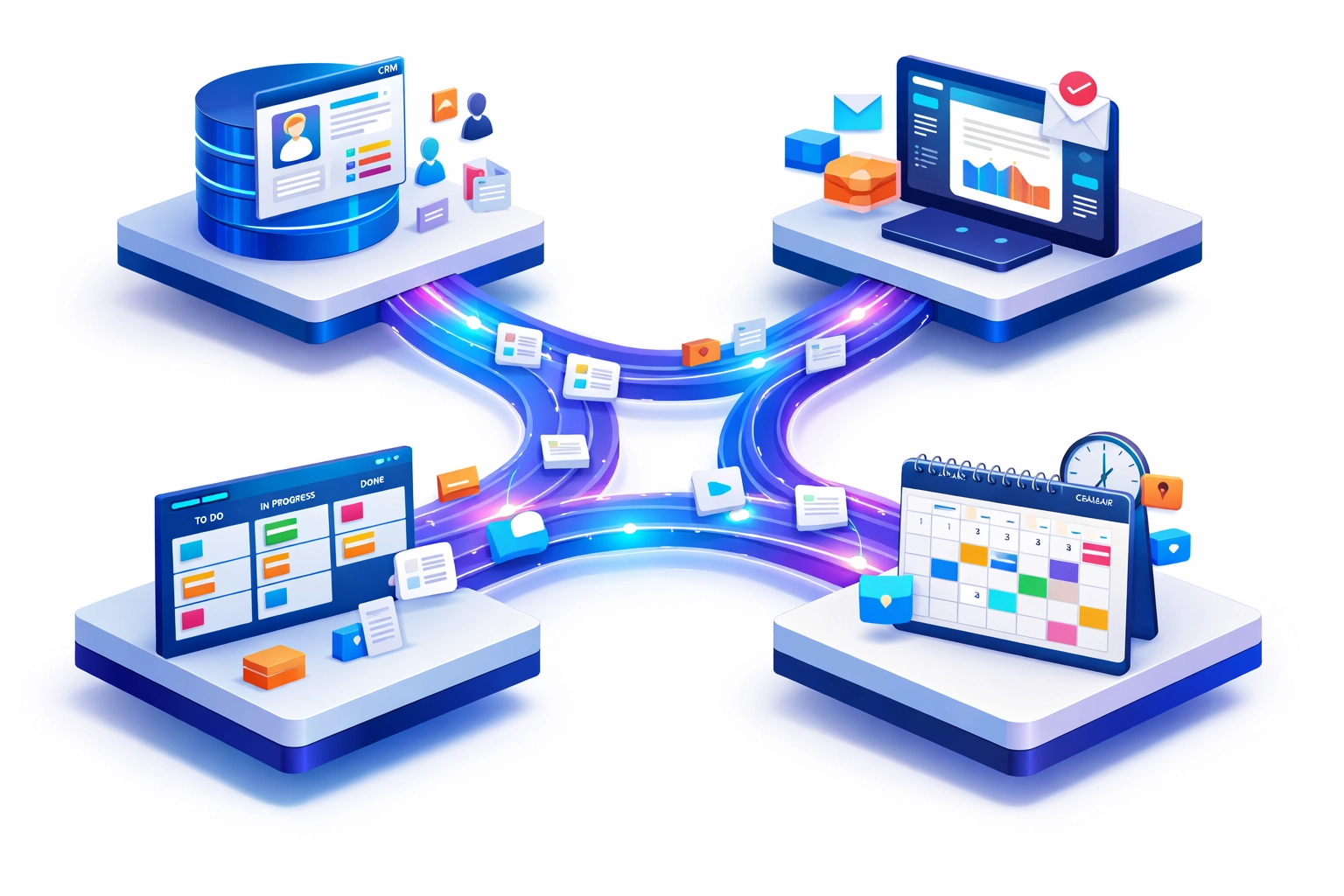
This is how ai automation for small business actually works in practice: not custom code that requires a dedicated developer on retainer, but smart workflows that connect your existing tools and eliminate repetitive tasks.
Speed to Value: Cash Flow Matters
Let's talk about what delays actually cost your business.
Every month you wait for custom software is another month burning cash on manual processes. Your team is still copy-pasting data. Still chasing follow-ups. Still making mistakes that cost real money.
With workflow automation, you see returns in weeks, not quarters. The 30–60 day implementation timeline means you start saving time and money almost immediately.
Your marketing team launches campaigns faster. Sales responds to leads within minutes instead of hours. Customer service has the information they need without digging through five different systems.
That's not theoretical efficiency. That's money staying in your business instead of disappearing into operational waste.
The Risk Factor: Predictability vs. Gambling
Ask any small business owner who's been burned by custom development. They'll tell you the same story.
Started at $40,000. Ended at $95,000. Took eight months instead of four. Still doesn't do everything they needed.
Custom development operates with high oversight requirements. You need someone technical managing the developers. Reviewing code. Testing features. Making decisions about trade-offs you don't fully understand.
Workflow automation? Fixed scope from day one.
You know exactly what you're getting. The methodology has been validated across multiple implementations. No surprises. No budget overruns. No wondering if you should have hired different developers.

For automation consulting, this predictability is everything. Small businesses don't have $50,000 contingency budgets sitting around. You need to know the real numbers before you commit.
When Custom Software Actually Makes Sense
Not everything should be automated through workflow platforms. Some situations genuinely require custom development.
You have a truly unique, mission-critical requirement that no existing solution addresses. Maybe you're in a highly specialized industry with compliance requirements that demand custom-built systems. Maybe your competitive advantage depends on proprietary technology.
But here's the test: Is your requirement actually unique, or is it just specific?
Invoice processing isn't unique. Lead management isn't unique. Customer onboarding workflows aren't unique. These are common business processes that thousands of companies handle every day.
If your needs involve standard workflows: even complex ones: business process automation through platforms like n8n or Airtable will solve them faster and cheaper than custom code.
Custom development makes sense when you're building the core product. When you're creating intellectual property. When the software itself is your business.
It doesn't make sense for operations, marketing workflows, or internal tools.
Integration: The Hidden Advantage of Modern Automation
One massive advantage workflow automation has over custom software? AI integration services are built in.
Modern automation platforms connect with your existing tools out of the box. Your CRM. Your email marketing platform. Your project management system. Your accounting software.
With custom development, every integration is another feature to build. Another API to understand. Another thing that can break when one of your vendors updates their system.
Workflow automation platforms maintain those connections for you. When Airtable updates their API, your workflow keeps running. When you switch from one email platform to another, you update a connection: not rewrite code.

This is how marketing automation AI delivers real results for small businesses. The AI tools are already integrated, already working, already proven across thousands of implementations.
The Bottom Line for Your Small Business Budget
You're not choosing between good and bad solutions. You're choosing between appropriate and wasteful spending.
Custom software development: $50,000–$150,000+, 3–12 months, variable outcomes, ongoing maintenance costs.
Workflow automation: $15,000–$40,000, 30–60 days, predictable results, minimal ongoing costs.
For small business budgets, the math is clear.
Workflow automation wins unless you have genuinely unique requirements that existing platforms can't handle. And honestly? Most businesses don't.
What you have are common problems that feel unique because they're yours. But invoice processing is invoice processing. Lead routing is lead routing. Customer follow-up is customer follow-up.
Solve them with proven automation tools, not expensive custom code.
Your business doesn't need bespoke software. It needs processes that work reliably without burning through your budget. It needs solutions that deploy quickly and start delivering value immediately.
That's what workflow automation delivers. That's what your small business budget actually needs.
Ready to automate your business processes without the custom development price tag? Start with a discovery session to identify your highest-impact automation opportunities.

[…] out how we compare custom software development vs. workflow automation to see which fits your current […]
[…] trying to fit your square-peg business into a round-hole software. If you want to scale, you need custom software development that grows with […]