
The Proven SMB Automation Framework: How to Integrate Marketing Automation AI Without Breaking the Bank

Most small and mid-sized businesses hesitate on marketing automation AI because they assume it requires enterprise budgets. Wrong. The real barrier isn't cost: it's knowing where to start and how to scale without bleeding resources.
We've helped dozens of SMBs automate business processes with budgets under $500/month. Here's the exact framework we use.
Why Most SMBs Get Marketing Automation Wrong
They start too big. They pick expensive platforms first. They try to automate everything at once.
Result? Wasted money, frustrated teams, and abandoned systems within three months.
The proven approach flips this. Start lean. Prove ROI. Scale strategically. That's the framework that works for ai automation for small business implementations that actually stick.
The Four-Phase SMB Automation Framework
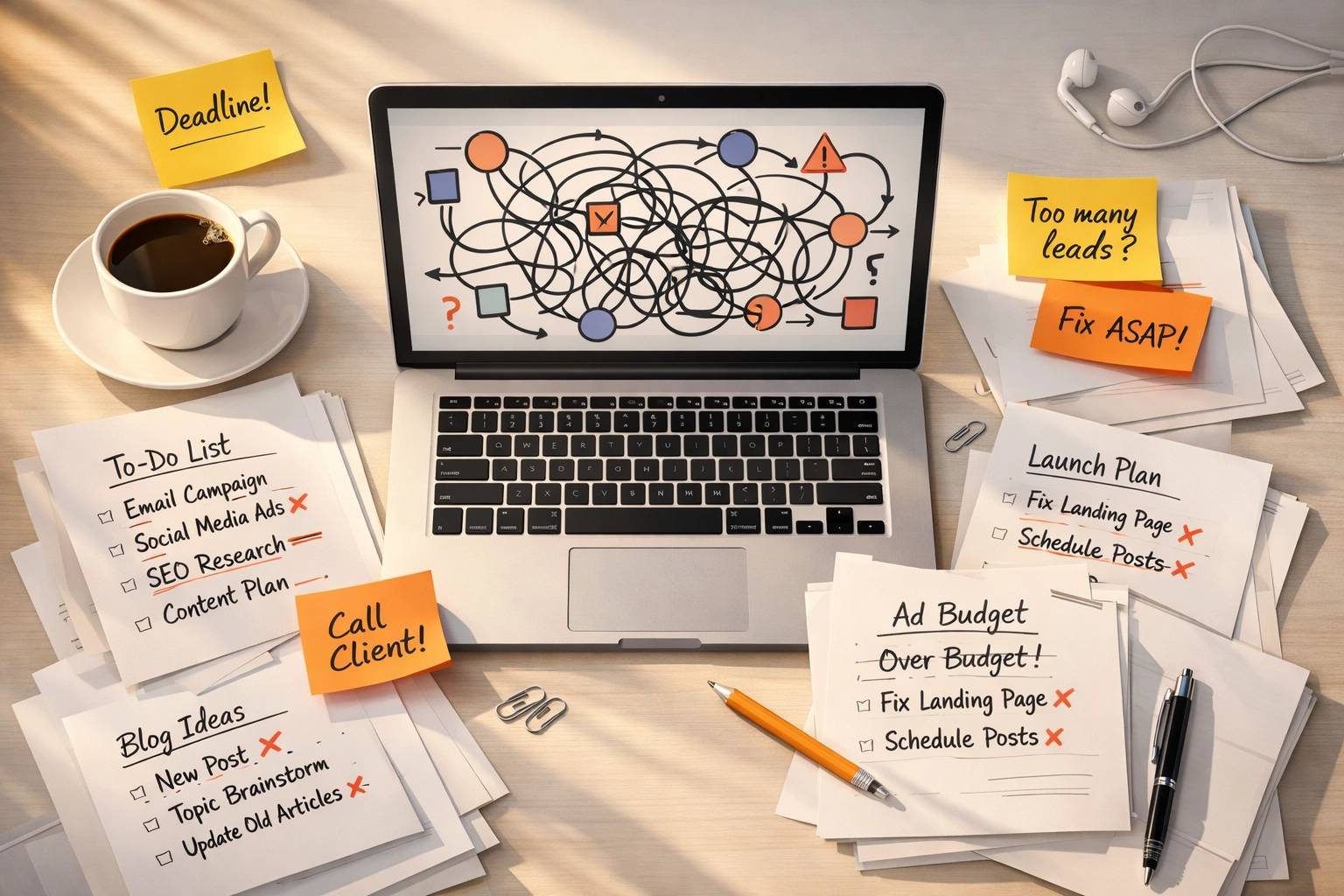
Phase 1: Audit Your Current Marketing Chaos (Week 1)
Before spending a dollar, map your existing processes. You can't automate what you don't understand.
Document these key areas:
- Lead capture points (forms, landing pages, social channels)
- Email follow-up sequences (or lack thereof)
- Data entry tasks consuming staff time
- Customer segmentation methods
- Campaign tracking and reporting workflows
Most businesses discover 15-20 hours per week of manual work that can be eliminated. That's your ROI justification right there.
Phase 2: Start With Zero-Cost Tools (Weeks 2-4)
Stop waiting for budget approval. Begin with platforms offering robust free tiers that include AI capabilities.
Klaviyo provides the strongest entry point: 1,000 contacts and 12,000 monthly emails at zero cost. More importantly, you get AI-driven subject line optimization, predictive analytics, and behavioral segmentation without paying premium prices.
Zapier's forever-free plan connects your marketing stack: CRM, email platform, spreadsheets, and social channels: creating workflow automation across 4,000+ apps. No coding required. No consultant fees needed.
For businesses using Airtable as their operational backbone, native automation features handle task assignments, notification triggers, and data updates automatically. This is airtable automation at its most accessible.
Action step: Pick one high-impact workflow. Email welcome sequences work best for most SMBs. Build it. Test it. Measure opens, clicks, and conversions over 30 days.
Phase 3: Layer In Behavioral Intelligence (Weeks 5-8)
Once basic automation runs smoothly, add AI-powered personalization without expanding your budget significantly.
Focus on these three capabilities:
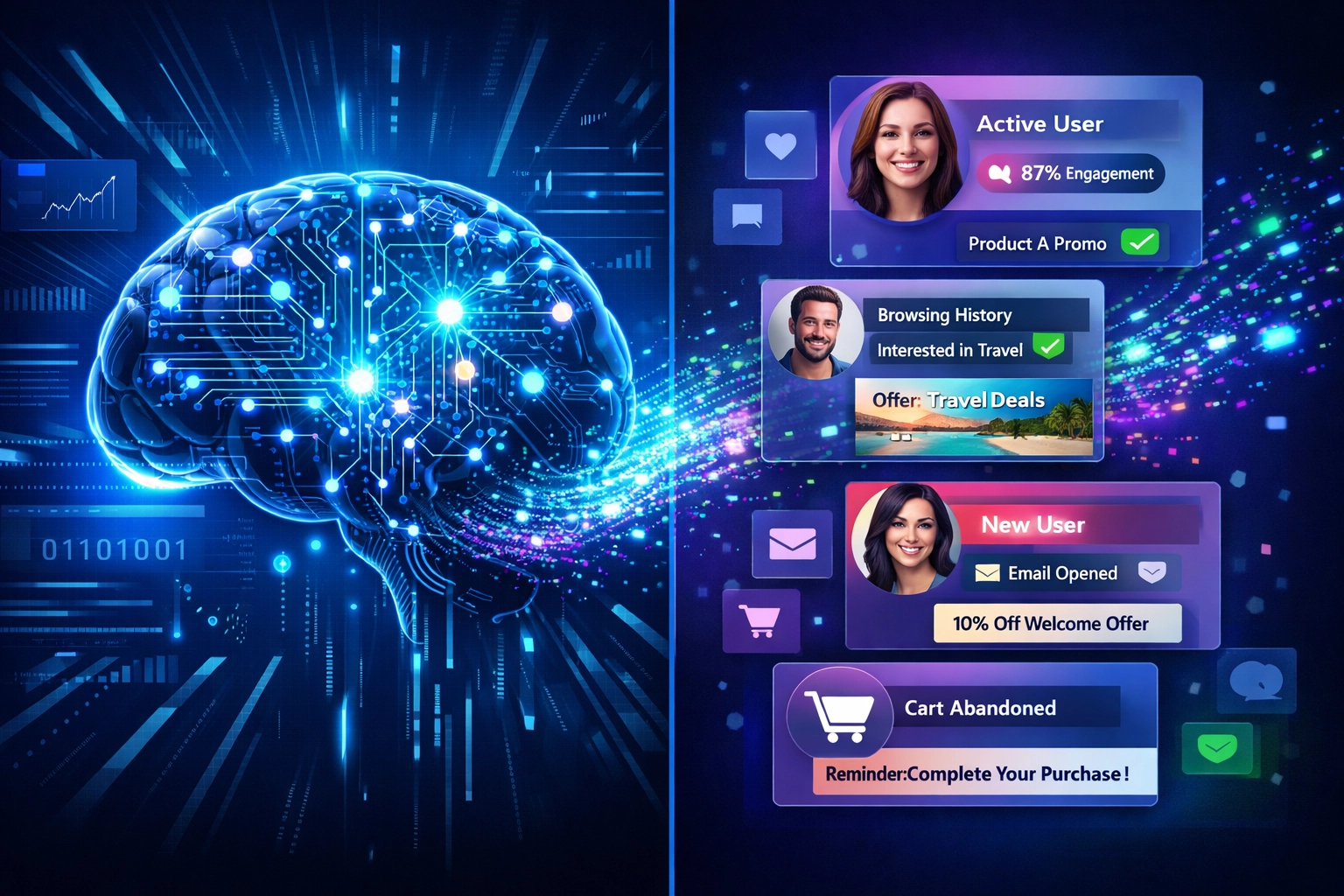
Real-time segmentation based on user behavior. When prospects visit your pricing page three times but don't convert, trigger a targeted email sequence addressing common objections. When customers haven't engaged in 60 days, launch a re-engagement campaign with special offers.
Predictive sending times using AI to determine when each contact is most likely to engage. Rather than batch-sending emails at 10 AM Tuesday, let the algorithm optimize delivery for each recipient.
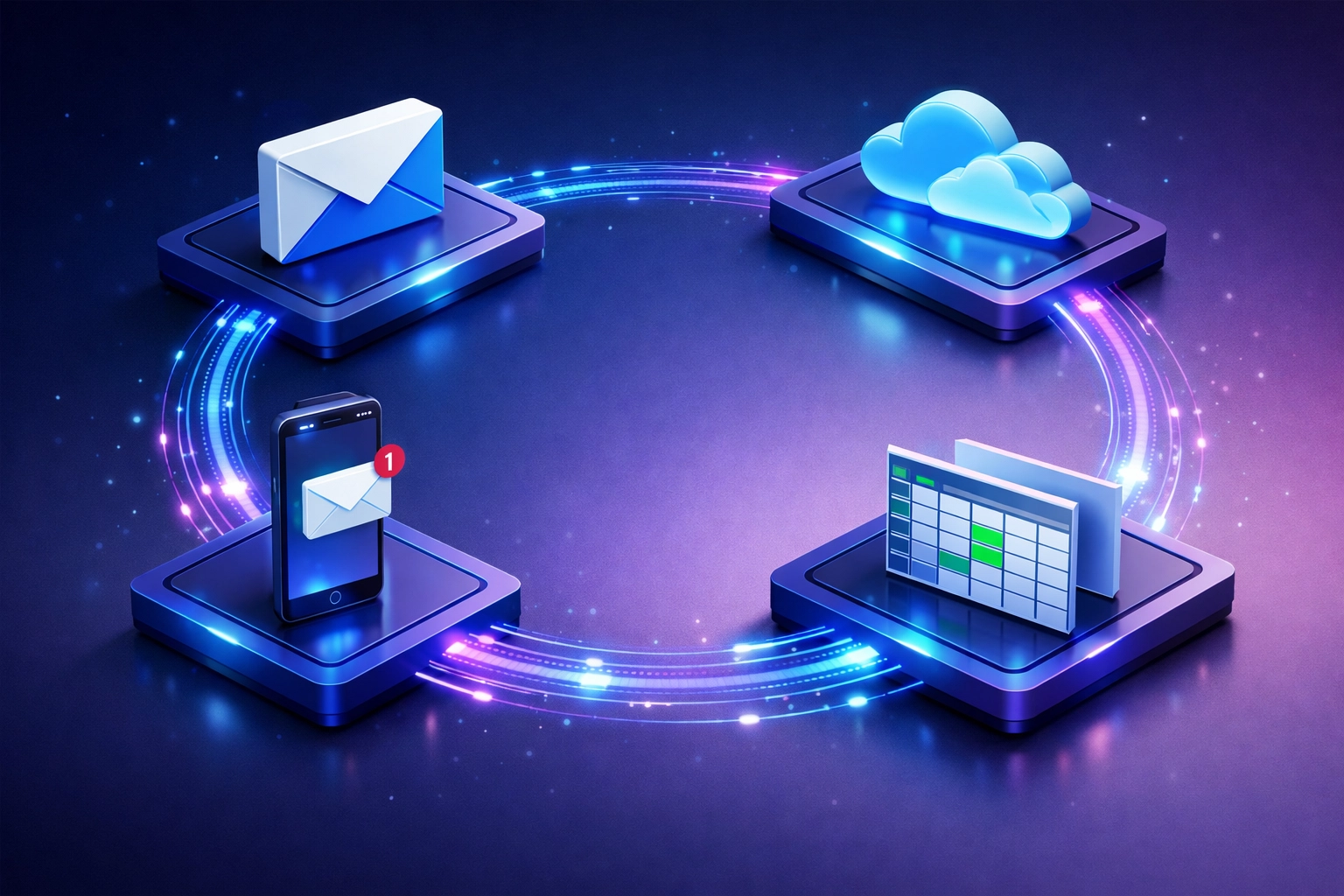
Cross-channel orchestration linking email, SMS, and web push notifications in unified flows. A prospect who opens your email but doesn't click gets a follow-up SMS 24 hours later. Simple. Effective. Budget-friendly.
These features exist in mid-tier plans ($50-150/month) from platforms like Klaviyo, HubSpot Starter, and ActiveCampaign. You're not jumping to enterprise pricing: you're adding capabilities strategically.
Phase 4: Build Your Zero-Touch Lead Engine (Weeks 9-12)
This is where marketing automation ai becomes a revenue multiplier rather than just an efficiency tool.
The zero-touch lead engine includes:
Smart lead scoring using AI to rank prospects based on engagement patterns, demographic fit, and behavioral signals. Your sales team stops chasing cold leads and focuses on contacts showing genuine buying intent.
Dynamic content personalization that adjusts email copy, landing pages, and CTAs based on industry, company size, or previous interactions. One campaign becomes dozens of personalized experiences.
Automated nurture sequences spanning weeks or months, moving prospects through awareness, consideration, and decision stages without manual intervention. Set it up once. It runs continuously.
Integration with your CRM ensuring hot leads get routed immediately to sales while cooler prospects continue automated nurturing. No leads slip through cracks. No manual data entry required.
The framework here uses n8n automation for custom workflows that connect your entire stack: email platform, CRM, payment processor, analytics tools: in sophisticated sequences impossible with basic Zapier flows.
The Budget Scaling Strategy
Here's the financial progression that works:
Months 1-3: $0-50/month on free/starter plans. Build foundation. Prove concept.
Months 4-6: $100-200/month. Add behavioral triggers and multi-channel campaigns. Track revenue attribution meticulously.
Months 7-12: $200-500/month. Layer in predictive analytics, advanced segmentation, and AI-powered optimization.
Year 2+: Scale based on demonstrated ROI. If automation generates $10,000 in attributed revenue monthly, investing $1,000 becomes a no-brainer.
Most SMBs reach positive ROI within 60 days using this framework. The key is incremental validation rather than big-bang implementations.
The Hidden Cost You're Already Paying
Manual marketing processes cost more than you think. Calculate the real expense:
A marketing coordinator spending 20 hours weekly on email campaigns, list management, data entry, and reporting represents $30,000-40,000 annually in salary costs (plus benefits). Workflow automation eliminates 60-70% of these manual tasks.
That same coordinator can now focus on strategy, content creation, and campaign optimization: activities that actually grow revenue.
The math is simple. Automation pays for itself within 3-6 months purely through labor savings, before counting increased conversion rates and revenue growth.

Common Pitfalls to Avoid
Over-complicating early workflows. Start with three-email sequences, not fifteen-touch omnichannel orchestrations. Complexity kills momentum.
Ignoring data quality. AI automation multiplies whatever you feed it. Garbage data produces garbage results. Clean your contact lists before automating.
Setting and forgetting. Effective automation consulting emphasizes continuous optimization. Review performance monthly. Test subject lines. Adjust segmentation rules. Refine triggers.
Skipping integration planning. Your email platform must connect seamlessly with your CRM, payment processor, and analytics tools. Verify integration capabilities before committing to any platform.
Neglecting compliance. CAN-SPAM, GDPR, and CCPA regulations apply to automated campaigns. Build unsubscribe workflows and data handling processes from day one.
Real-World SMB Example
A regional B2B services company with 12 employees implemented this framework:
Month 1: Moved from manual email blasts to Klaviyo with automated welcome sequences and abandoned cart flows. Cost: $0 (under free tier limits).
Month 3: Added behavioral segmentation and SMS campaigns for high-value prospects. Cost: $125/month. Result: 34% increase in qualified leads.
Month 6: Integrated n8n workflows connecting their CRM, invoicing system, and email platform for end-to-end automation. Cost: $275/month total. Result: 8 hours weekly saved in manual data entry, 52% improvement in lead response time.
Month 12: Full zero-touch lead engine with predictive scoring and dynamic content. Cost: $450/month. Result: $85,000 in directly attributed revenue, 22% reduction in customer acquisition costs.
That's business process automation delivering measurable ROI without enterprise budgets or six-month implementation timelines.

Your Next Steps
Pick one workflow causing daily friction in your marketing operations. Email follow-up typically offers the fastest wins.
Map the current manual process. Identify trigger points, decision logic, and desired outcomes.
Build the automated version using a free-tier platform. Test with a small segment before rolling out broadly.
Measure religiously. Track time saved, conversion rates, and revenue attribution.
Scale based on results, not assumptions.
The businesses winning with ai integration services aren't those with the biggest budgets: they're the ones that start focused, validate quickly, and scale strategically.
Your competitors are either ignoring automation entirely or drowning in overcomplicated systems they can't maintain. Neither position is sustainable.
The middle path: this proven framework: gives SMBs the automation advantages of enterprise companies without the enterprise price tag.
Ready to build your zero-touch lead engine? Start with one workflow this week. You can explore our automation consulting services if you need guidance implementing this framework in your specific business context.
