
AI Automation Secrets Revealed: How Small Businesses Cut Costs by 40% Without Hiring Developers
You're paying people to do work that software could handle in seconds.
That's not an insult to your team: it's just reality. Data entry. Scheduling. Email responses. Invoice generation. These tasks consume hours daily while your best people get buried in busywork instead of growing your business.
Small businesses are slashing operational costs by 40% or more without writing a single line of code. No developers. No six-month implementation timelines. No $100,000 custom software projects.
The secret? Pre-built AI automation tools that plug directly into your existing workflows.
The Real Numbers Behind AI Cost Savings
Let's cut through the hype. Industry data shows small businesses achieve 20-45% cost reductions within the first year of implementing AI automation. The highest performers? They're hitting 60-70% savings in specific departments.
Here's where the money actually comes from:
Labor costs drop immediately. Service businesses typically spend 50-70% of their budget on labor. AI automation doesn't replace your team: it removes the repetitive work dragging them down. A digital marketing agency reduced their data entry staff from three people to one supervisor overseeing automated systems. Savings: $60,000 annually. The other two team members? Reassigned to client strategy work that actually generates revenue.

Customer support becomes affordable. Traditional 24/7 support costs roughly $210,000 per year when you factor in staff, benefits, and infrastructure. One website design company deployed AI chatbots to handle initial customer inquiries. Response time dropped from 4 hours to 4 minutes. Support ticket volume fell 70%. Annual costs: $60,000 (chatbot plus one supervisor). That's a 71% reduction.
Marketing automation multiplies output. SEO analysis that previously took hours now completes in minutes. Email campaigns run on autopilot. Social media posts schedule themselves. A photography business automated their entire content calendar and email marketing using Airtable automation paired with AI content tools. Result: organic traffic tripled while marketing costs dropped 60%.
Four Automation Strategies That Actually Work
1. Automate Customer Communication
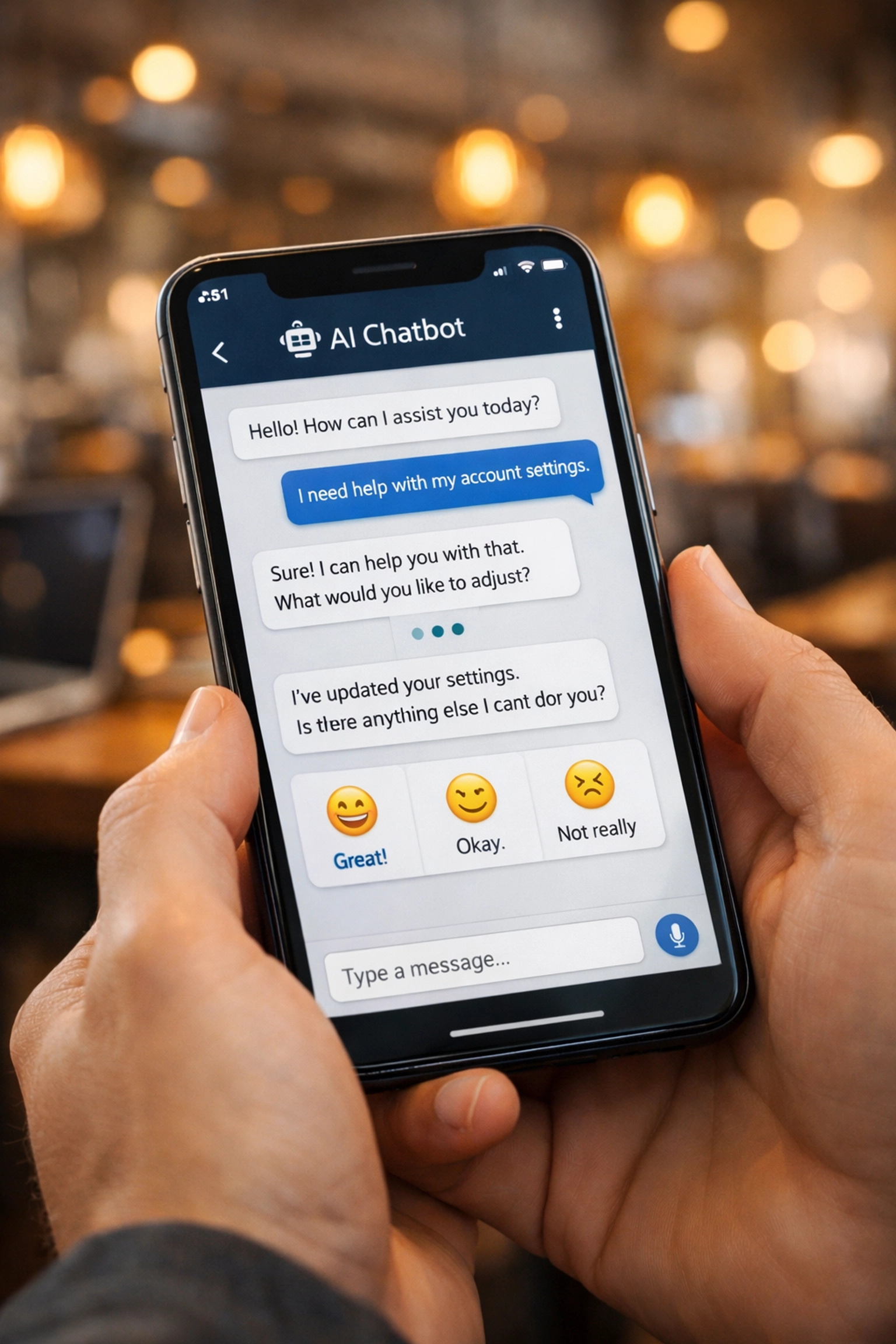
AI chatbots handle the repetitive questions that eat up your team's time. Product availability. Pricing. Business hours. Appointment scheduling.
These aren't the clunky chatbots from 2019. Modern AI understands context, handles complex queries, and escalates to humans only when necessary. Deploy them across your website, Facebook Messenger, and Instagram DMs simultaneously.
Real implementation: A local HVAC company automated quote requests through their website chatbot. The system qualifies leads, schedules appointments, and sends confirmation emails: all without human intervention. Their office manager went from spending 15 hours weekly on phone calls to managing the system in 3 hours.
2. Build Zero-Touch Business Processes
Every manual handoff in your workflow is a cost center. Invoice creation. Client onboarding. Data transfers between systems. Report generation.
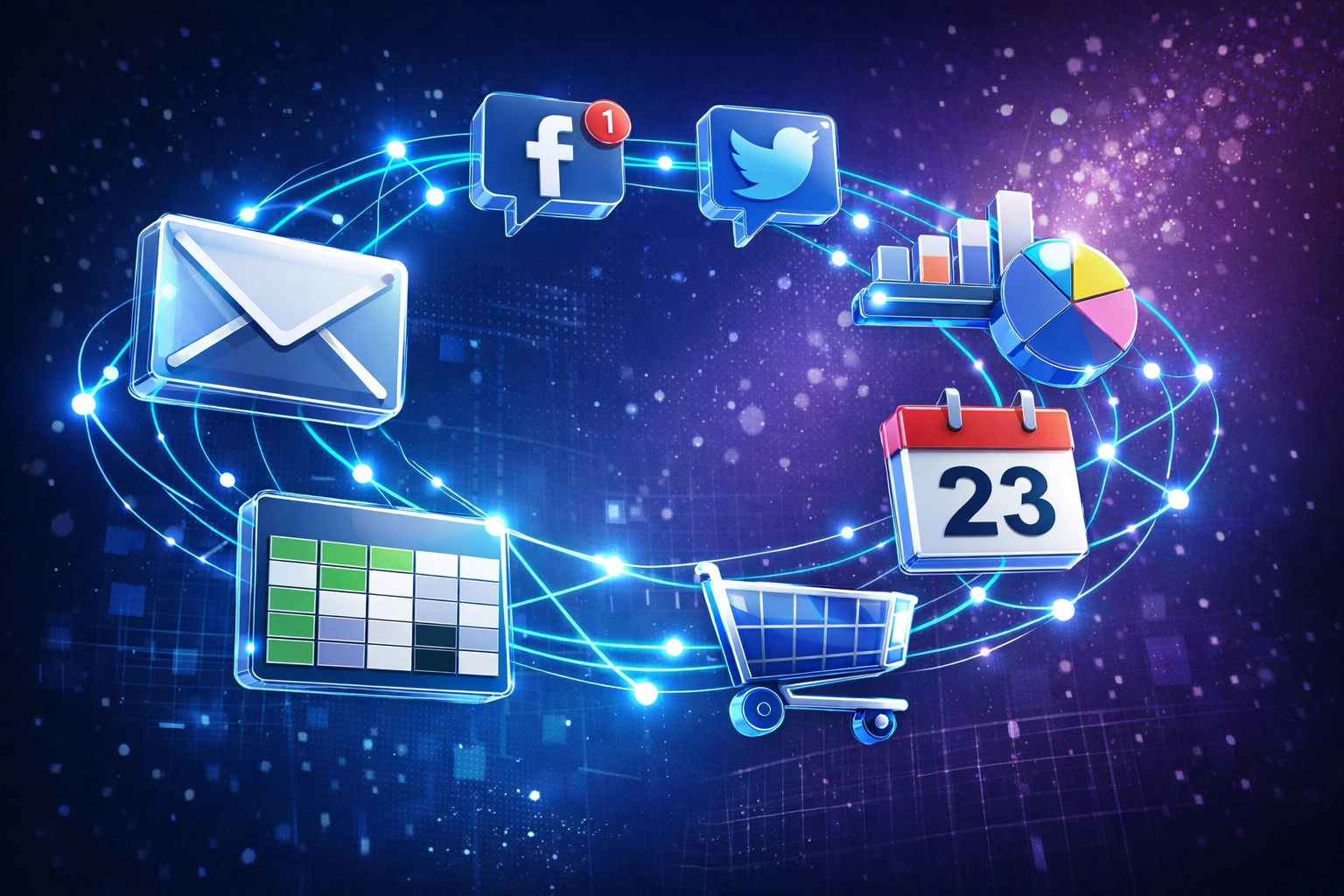
Platforms like n8n and Zapier connect your existing tools without coding. When a client signs a contract in your CRM, automation triggers: project folder created, team notified, invoice sent, welcome email deployed, project management tasks generated.
The n8n vs Zapier debate matters less than execution speed. Both platforms eliminate the manual work that drains productivity. Choose based on your specific needs: n8n offers more customization for complex workflows, while Zapier provides faster setup for standard integrations.
3. Transform Marketing Operations
Email marketing platforms with AI capabilities now handle segmentation, send-time optimization, and content personalization automatically. Social media schedulers analyze engagement patterns and post when your audience is most active.
A local retail shop implemented automated email sequences triggered by customer behavior. Browse a product category? Automated follow-up showcasing similar items. Abandon cart? Personalized reminder sent 3 hours later. Purchase complete? Review request deployed after typical usage period.
Cost comparison: Hiring a marketing coordinator: $45,000-$65,000 annually plus benefits. Marketing automation suite: $200-$500 monthly. The math is simple.
4. Streamline Operational Systems
Accounting software with AI features categorizes expenses automatically. Inventory management systems predict restock needs based on sales patterns. Project management tools with AI assistants generate status reports and identify bottlenecks without manual oversight.
An e-commerce store reduced inventory overstock by 80% using predictive AI. Their automated system analyzes sales velocity, seasonal trends, and supplier lead times to optimize orders. Monthly operational costs dropped from $12,000 to $4,500: a 62.5% reduction.
Why This Works Without Developers
Traditional automation required custom development. You'd brief developers, they'd build something, you'd test it, they'd fix bugs, and six months later you'd have a solution that might work.
That model is dead.
Modern AI automation runs on pre-built platforms designed for business owners, not programmers. The technology handles the complex parts: natural language processing, data connections, workflow logic: while you simply configure it through visual interfaces.
No code means no developer salaries. No maintenance contracts. No technical debt. When your needs change, you adjust the automation yourself in minutes.
According to recent surveys, 89% of small businesses using AI automation saw average cost reductions of 11.4% year-over-year. The businesses hitting 40%+ savings? They're automating multiple departments simultaneously rather than testing one tool in isolation.
The ROI Timeline You Can Expect
Most businesses reach positive ROI within 12-18 months. The fastest wins come from automating customer support and data entry: these show savings within weeks.
Month 1-3: Initial setup and testing. Costs are higher as you invest in platforms and configuration time. Actual savings: minimal.
Month 4-6: Automation stabilizes. Teams adapt to new workflows. You start seeing consistent time savings and operational cost reductions. Savings accelerate.
Month 7-12: Full implementation across departments. The compounding effect kicks in as automated systems communicate with each other. This is where 40%+ cost reductions materialize.
Year 2+: Continuous optimization. You identify new automation opportunities monthly. Savings grow as you eliminate additional manual processes.
What Yotomations Actually Does
We build these systems for businesses that want results, not experiments. Our approach focuses on lead generation automation, operational workflow optimization, and AI-powered customer engagement.
Custom software when you need it. Pre-built automation when that's smarter. We're not married to a specific technology: we're focused on your bottom line.
Most consulting firms overcomplicate this. They propose massive transformation projects with enterprise-grade complexity. You don't need that. You need targeted automation that pays for itself in months, not years.
Start With One High-Impact Process
Don't try to automate everything simultaneously. Pick the process costing you the most time or money right now.
Customer support drowning in repetitive questions? Start there with AI chatbots. Data entry consuming hours daily? Automate it first. Marketing eating your budget with minimal returns? Implement automation sequences.
One well-executed automation creates momentum. Your team sees the impact. Leadership understands the ROI. You build the case for expanding automation across other departments.
The 40% cost reduction isn't theoretical: it's happening right now across thousands of small businesses. The question isn't whether AI automation works. It's whether you'll implement it before your competitors do.
Ready to identify your highest-impact automation opportunity? Contact us and we'll walk through your specific situation. No sales pitch. Just a straightforward conversation about where automation makes sense for your business.
