
Can AI Integration Services Really Help You Scale Faster? Find Out Here
Yes. AI integration services help businesses scale faster. Not theoretically. Demonstrably.
A 2023 McKinsey report showed companies using AI-driven decision-making saw a 20% increase in revenue and a 30% reduction in operational costs compared to businesses stuck with traditional analytics. That's not incremental improvement: that's a competitive gap widening in real-time.
The question isn't whether AI integration works. It's whether you're willing to let your competitors pull ahead while you're still manually processing what could be automated.
The Scaling Problem Most Business Leaders Face
You want to grow. But every time you try to scale, you hit the same wall: more customers mean more team members, more overhead, more complexity, and shrinking margins.
Traditional scaling looks like this: double your revenue, double your headcount, triple your headaches.
AI integration services break that pattern.

Operational Leverage Without the Headcount Bloat
Here's what changes when you implement ai integration services properly:
Your systems handle thousands of customer interactions. Your backend processes run autonomously. Your team focuses on strategy and high-value work instead of repetitive tasks.
You scale like a large enterprise without the enterprise-level costs.
This isn't about replacing your team: it's about multiplying their impact. One person with the right automation can do the work of five without proper systems.
Consider workflow automation through platforms like n8n automation. You can connect your CRM, email systems, project management tools, and analytics platforms into a single, intelligent workflow. When a lead comes in, the system qualifies them, schedules follow-ups, updates your team, and triggers personalized marketing sequences. Zero manual input.
That's operational leverage.
Seamless Integration Into Your Existing Systems
The biggest objection to AI adoption? "We'd have to rebuild everything."
Wrong.
AI integration services embed artificial intelligence into your current infrastructure without disruption. Your team keeps using the tools they already know. The difference? Those tools now work smarter.
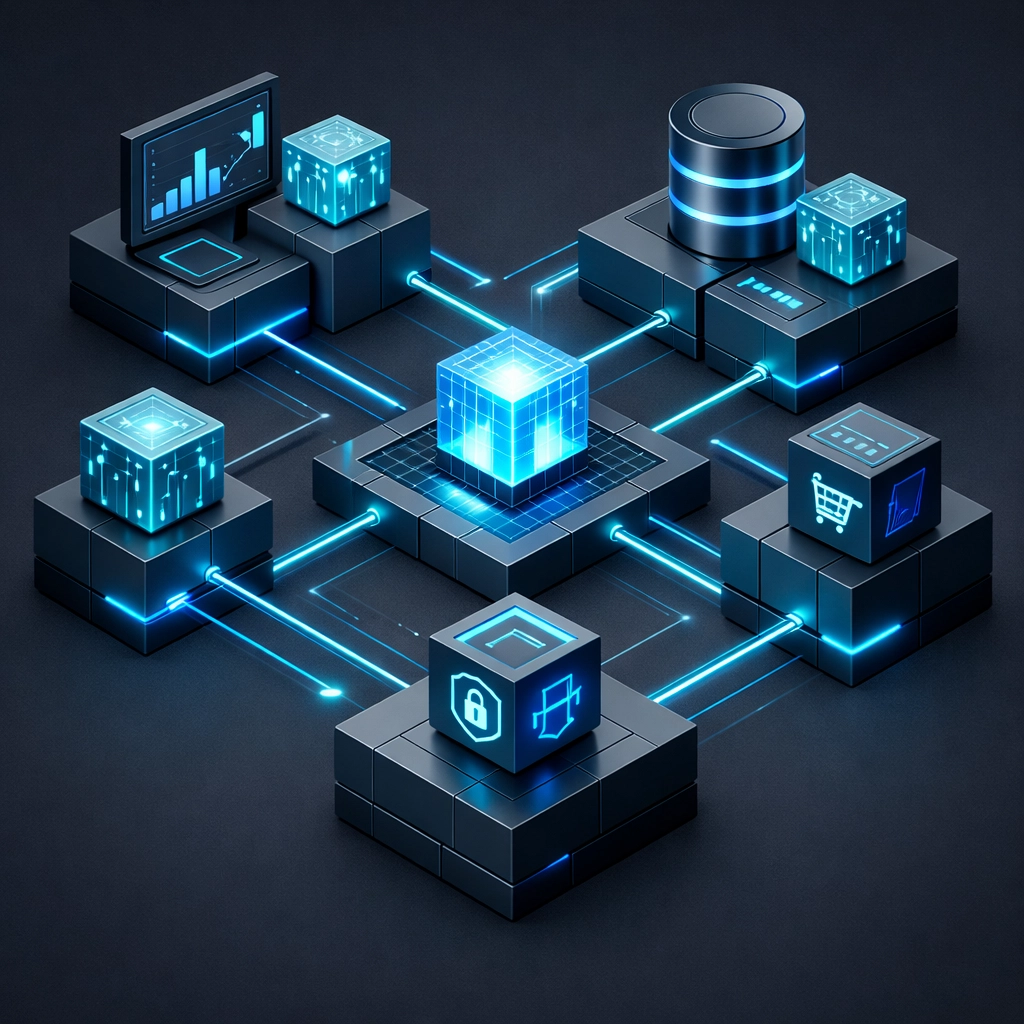
Think about Airtable automation as an example. Your team already uses spreadsheets and databases to track projects, inventory, or customer data. AI integration transforms that static data into an active system that:
- Automatically categorizes and tags incoming information
- Identifies patterns and flags anomalies
- Generates reports without manual data entry
- Triggers actions across connected platforms
You're not learning a new system. You're making your existing system intelligent.
The same principle applies to marketing automation AI. Instead of ripping out your current email platform or CRM, integration services layer AI capabilities on top. Your marketing team gets predictive analytics, dynamic content personalization, and automated campaign optimization: all within their familiar workspace.
Faster Decision-Making = Faster Growth
Speed kills. In business, speed wins.
AI-driven analytics transform raw data into actionable insights in real time. Not weekly reports. Not monthly dashboards. Real-time intelligence that lets you pivot faster than your competition can even identify the need to change.
When your systems automatically surface trends, predict customer behavior, and calculate ROI across initiatives, your leadership team makes better decisions faster.
Organizations with strong AI foundations deploy solutions across the enterprise quickly. They respond to market changes while competitors are still gathering data for their quarterly review.

The Real-World Results Businesses Are Seeing
81% of businesses are now investing more in AI. That's not hype: that's market reality.
Companies implementing AI automation for small business operations report:
- Shorter customer wait times through intelligent chatbots and automated support routing
- Greater scalability in customer service without proportional team expansion
- Higher conversion rates from AI-powered lead qualification
- Reduced operational bottlenecks through automated business process automation
One pattern stands out across successful implementations: businesses that integrate AI into existing workflows see faster ROI than those that try to build AI solutions from scratch.
That's where automation consulting becomes critical. You need someone who understands both the technology capabilities and your specific business operations. Generic AI solutions rarely deliver: custom software development tailored to your workflows does.
What AI Integration Actually Looks Like in Practice
Let's get specific. What does this mean for your business?
For operations teams: Automated invoice processing, inventory management, and supply chain optimization. Systems that predict stockouts before they happen and automatically reorder based on historical patterns and current trends.
For sales teams: Intelligent lead scoring that prioritizes your team's time on high-probability opportunities. Automated follow-up sequences that adapt based on prospect behavior. CRM systems that update themselves.
For marketing teams: Campaign performance analysis that happens in real-time. Content recommendations based on customer behavior patterns. Ad spend optimization that shifts budgets automatically toward winning channels.
For customer service: Support ticket routing to the right team member based on complexity and expertise. Chatbots that handle routine questions and escalate nuanced issues to humans. Knowledge bases that update themselves based on common questions.
This is what workflow automation delivers when implemented strategically.

The Integration Approach That Actually Works
Not all AI integration is created equal. Here's what separates successful implementations from expensive failures:
Start with your biggest bottleneck. Don't try to automate everything at once. Identify the single process that's limiting your growth most and solve that first.
Integrate, don't replace. Your team already has tools they trust. Build on that foundation rather than forcing adoption of entirely new platforms.
Focus on measurable outcomes. "We implemented AI" means nothing. "We reduced customer response time by 60%" means everything.
Plan for scale from day one. The systems you implement today should handle 10x your current volume without breaking.
This is why many businesses partner with specialists for ai integration services rather than attempting DIY implementations. The technology is accessible, but the strategy behind effective integration requires experience.
The Cost of Waiting
Every day you delay AI integration, your competitors are building operational advantages you'll struggle to overcome.
They're handling more customers with smaller teams. They're making faster decisions based on better data. They're scaling efficiently while you're drowning in manual processes.
The question isn't whether AI integration services help you scale faster. The research proves they do. The question is whether you'll implement them before the competitive gap becomes insurmountable.
Your move.
Ready to explore how AI integration can accelerate your business growth? Check out our approach to automation consulting and see what's possible when your systems work as intelligently as your team.
