
5 Steps How to Deploy AI Automation for Small Business and 10x Your Output (Easy Guide for Founders)
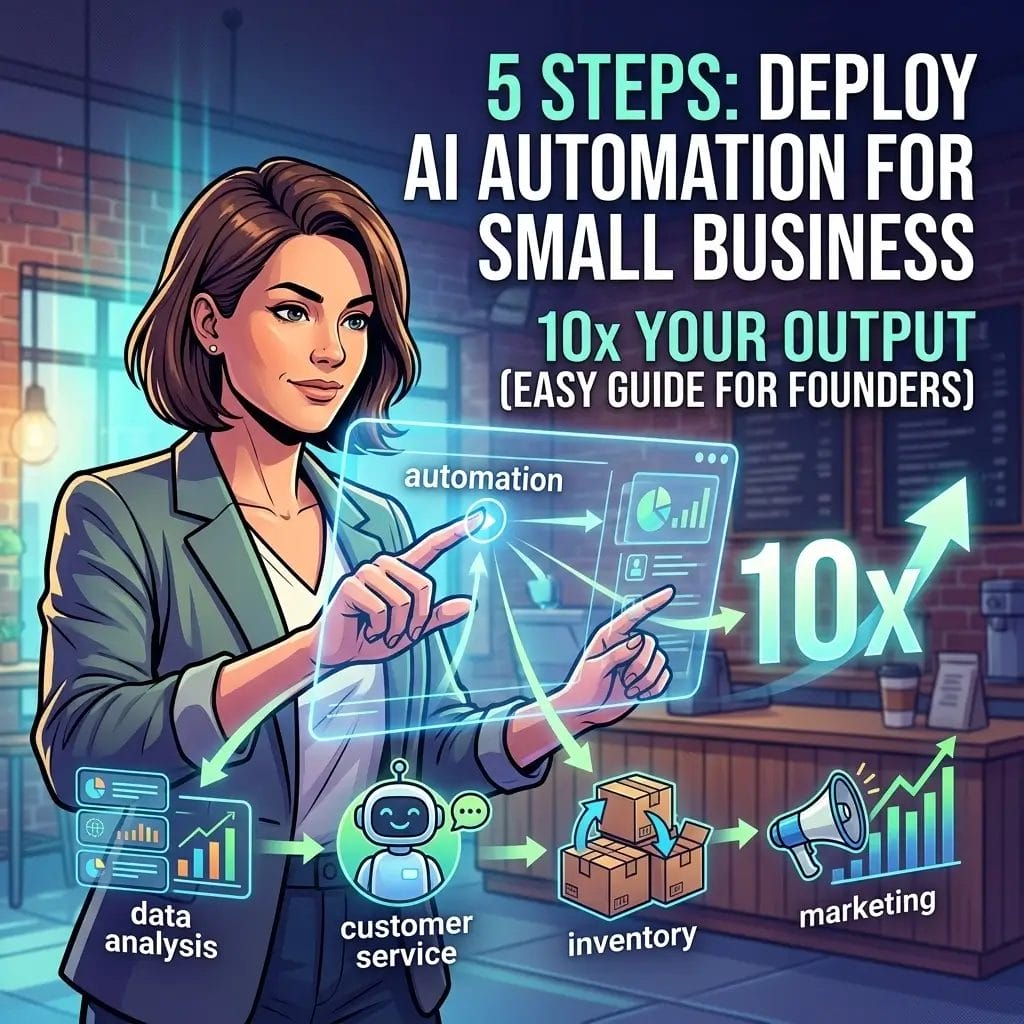
Most founders are drowning. You started your business to build something great, but now you spend 70% of your time on "maintenance", the endless emails, the data entry, the scheduling, and the follow-ups. You are the bottleneck.
At Yotomations, we see this every day. Founders think the solution is hiring more people. It isn’t. The solution is workflow automation. In 2026, scaling your output doesn't mean scaling your headcount. It means scaling your digital workforce.
If you want to 10x your output without 10xing your stress, follow this 5-step playbook to deploy AI automation for small business.
Step 1: Find Your “Hidden Gold” Tasks
Don’t buy tools first. Start with the work. You need to identify the tasks that are currently "killing" your productivity. We call these "Hidden Gold" because once you automate business processes associated with them, you unlock massive amounts of high-value time.
Spend 60 minutes auditing your week. Look for tasks that fit the FRM Framework:
- Frequent: Does it happen daily or weekly?
- Repeatable: Is there a clear pattern or set of instructions?
- Measurable: Can you define a "perfect" output?
Typical Candidates for AI Automation:
- Customer Support: Answering FAQs, routing tickets, or checking order statuses.
- Sales & Marketing: Lead qualification, personalized LinkedIn outreach, or marketing automation ai for email sequences.
- Back Office: Generating invoices, syncing data between your CRM and spreadsheets, or summarizing meeting notes.
- Content: Drafting social media posts or product descriptions. Check out our content generation use cases for ideas.
The Goal: Pick ONE "no-brainer" task. High time cost, low risk. That is your starting point.

Step 2: Design the “To-Be” Workflow
Once you have the task, stop. Do not go to ChatGPT yet. You need a blueprint. If you automate a mess, you just get an automated mess. You need to redesign the flow with AI at the center.
Yaakov (Koby) Oranski often reminds our clients: "Logic comes before the engine." You need to map out the "To-Be" state.
- Map the Current Mess: Write down every step. "Client sends email -> I open Gmail -> I copy data -> I paste it into Airtable -> I reply."
- Insert the AI Brain: How does the process look when an LLM handles the middle? "Client sends email -> AI classifies the intent -> AI searches Airtable automation for client history -> AI drafts a reply -> You hit 'Send'."
- Set Guardrails: Define exactly what the AI can do autonomously and where it must stop. For example, AI can draft a refund email, but it cannot authorize a payment over $500.
- Pick Your Metrics: How will you know this worked? Is it hours saved? Reduced response time? Accuracy?
If you are unsure where to start, our AI Audits can help you map these workflows with precision.
Step 3: Pick the Right Stack (No-Code First)
You don’t need a team of expensive engineers for your first win. You need "glue" tools. For small businesses, we recommend a "No-Code/Low-Code" approach. This allows for custom software development results without the 6-month wait time.
At Yotomations, our favorite stack for clients usually involves:
- n8n automation: The most powerful, flexible tool for connecting apps. Unlike Zapier, n8n automation allows for complex logic and self-hosting, which is critical for data privacy.
- Airtable: The ultimate "single source of truth." Airtable automation acts as your database and project manager in one.
- Make.com: Excellent for visual builders who want to see their data move in real-time.

Selection Criteria:
- Integrations: Does it talk to your CRM (HubSpot, Pipedrive, Salesforce)?
- Pricing: Is it scalable?
- Ease of Use: Can your team manage it once the automation consulting phase is over?
Avoid "Franken-stacks", don't buy 10 tools. Buy the two that solve 80% of your problems.
Step 4: Run a 30-Day Pilot
Execution is everything. You’ve found the task, designed the flow, and picked the tool. Now, run an experiment. Treat this as a "Beta" launch for your internal operations.
- The Parallel Run: For the first week, let the AI run alongside your manual process. Compare the AI's output to your own.
- Team Training: Spend 90 minutes showing your team how to "co-pilot" with the AI. They need to know that the AI isn't replacing them; it’s giving them a promotion to "Manager of the AI."
- The Feedback Loop: Create a simple Slack channel or form where the team can report when the AI "hallucinates" or gets a step wrong.
- Refine the Prompts: Most AI failures aren't tool failures; they are communication failures. Refine your instructions (prompts) until the output is 95% perfect.
Look at our Yelp Ads Intake Form case study to see how a structured intake process can change the game.
Step 5: Scale and Compound the Gains
One automation is a novelty. Five automations is a transformation. Once your pilot is successful, it’s time to move toward business process automation at scale. This is where the 10x output actually happens.
The Compounding Effect:
Imagine you automate a lead qualification process. It saves 10 hours a week. You don't give that time back to the void. You reinvest those 10 hours into the next automation.
- Month 1: Automate Support (Save 10 hours).
- Month 2: Automate Sales Outreach (Save another 10 hours).
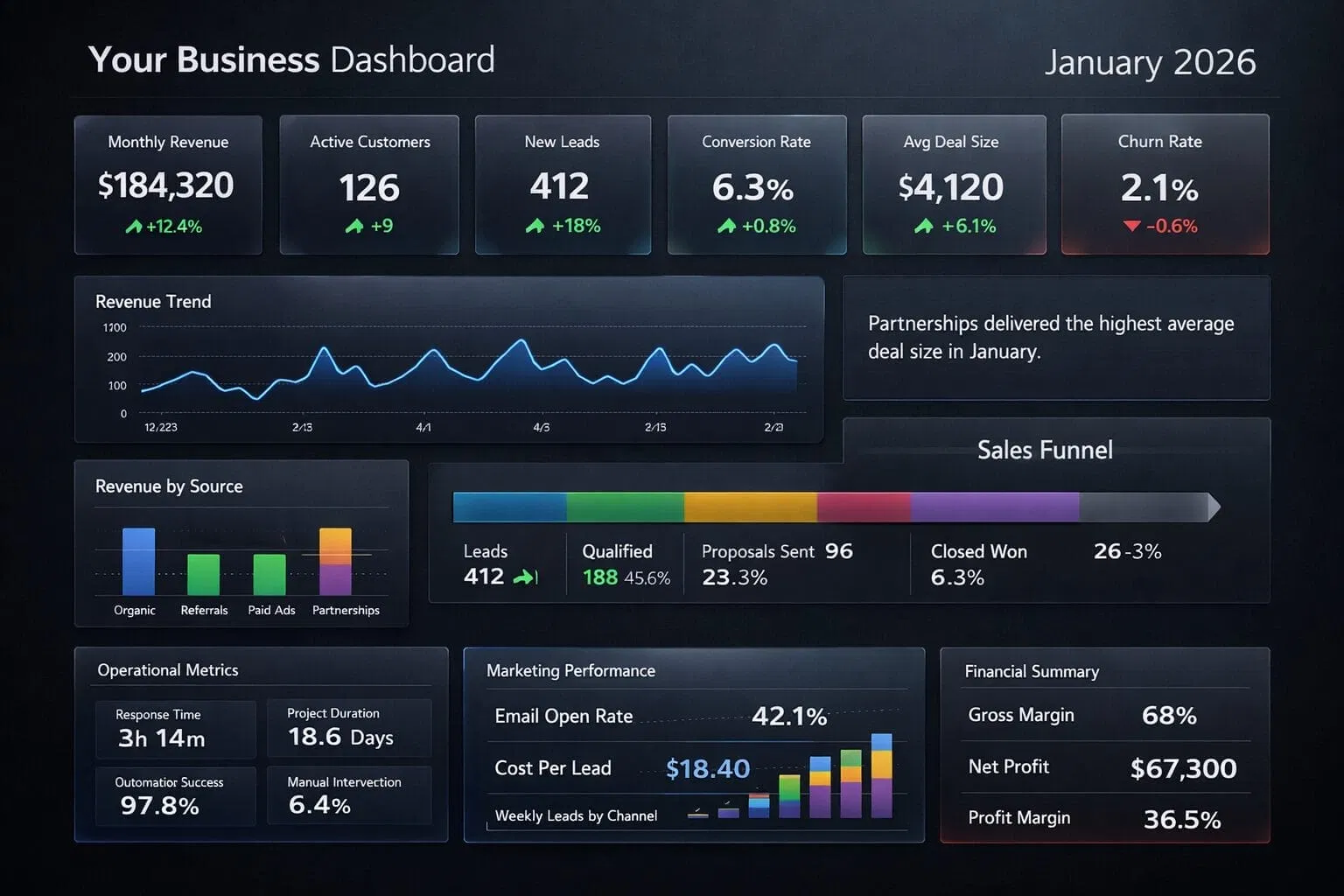
- Month 3: Automate Reporting and KPI tracking.
By Month 6, your "human" team is doing the work of a team triple its size. This is how small founders compete with enterprise giants.
Create an Automation Registry
As you scale, keep a document of every workflow you've built. Who owns it? What tool does it use? When was it last updated? This prevents "Shadow AI" and ensures your systems remain reliable and autonomous.
Why Now?
The gap between businesses that use ai integration services and those that don't is widening. In 2026, "doing it manually" isn't just slow: it's a liability.
You don't need a million-dollar budget. You need a 5-step plan and the discipline to execute it.
Recap for Founders:
- Audit: Find the repeatable "gold."
- Design: Map the logic before the tool.
- Select: Use n8n, Airtable, or Make.
- Pilot: Run a 30-day experiment.
- Compound: Reinvest saved time into the next win.
Ready to stop being the bottleneck? At Yotomations, we specialize in ai automation for small business. We don't just give you tools; we build the custom systems that allow you to thrive.
Don't wait for your competitors to automate you out of the market. Start with Step 1 today. If you need an expert hand to guide the process, explore our services or book a consultation. Clarity is just one automated workflow away.
