
Are Generic CRMs Dead? Why High-Growth Startups Are Moving to Custom Software Development

Standard CRMs are becoming a bottleneck.
For a decade, the advice for every founder was simple: "Just buy Salesforce." Or HubSpot. Or Pipedrive. It didn't matter which, as long as you had a central database to dump your leads. It worked: until it didn't.
Today, high-growth startups are hitting a wall. They’ve realized that generic, off-the-shelf software is built for everyone, which means it’s built for no one. It’s cluttered. It’s slow. It requires endless manual data entry. Most importantly, it doesn’t talk to your other systems without expensive, fragile middleware.
The verdict? Generic CRMs aren’t technically dead, but for startups that want to scale fast, they are obsolete.
At Yotomations, we are seeing a massive shift. Founders are no longer looking for a better "database." They are looking for a proprietary operating system. They are moving toward custom software development to reclaim their speed.
The Friction Point: Why Off-the-Shelf is Failing You
When you first start, a generic CRM is fine. You have ten leads and one salesperson. But as you grow, the "convenience" of SaaS turns into a tax on your productivity.
1. The Feature Bloat Nightmare
Generic CRMs try to be everything to everyone. Your sales team only needs five specific fields to close a deal, yet they have to navigate through fifty tabs and menus they will never use. This complexity leads to low adoption. If your team hates the tool, they won’t use it. If they don’t use it, your data is garbage.
2. The Manual Data Entry Trap
Traditional CRMs were built as static digital filing cabinets. They depend on humans to type in information. In 2026, manual data entry is a failure of leadership. High-growth teams need workflow automation that pulls data directly from product usage, marketing signals, and customer support tickets.
3. The "Silo" Problem
Generic tools often sit in a vacuum. Your CRM doesn’t know what’s happening in your billing system or your Slack channels unless you pay a developer to build a "bridge" that breaks every time the CRM updates its API.

The Rise of Custom Software Solutions
Why settle for a tool that forces you to change your process? High-growth startups are now building their own "Composable CRMs." This doesn't mean writing millions of lines of code from scratch. It means using custom software development to weave together the exact features they need.
By leveraging n8n automation and airtable automation, companies can create a backend that is 100% aligned with their unique sales motion.
The benefits are undeniable:
- Speed: Only the features you need. No lag. No fluff.
- Total Control: You own the roadmap. You aren't waiting for a SaaS vendor to release a feature your business desperately needs.
- Cost Scaling: Stop paying per-user fees that punish you for hiring more people. Build once, scale infinitely.
Building a "Moat" Through Custom Systems
Investors like Yaakov (Koby) Oranski understand that in an era of generic AI, operational efficiency is a competitive advantage. If you and your competitor both use the same generic CRM and the same generic marketing templates, you have no advantage.
When you automate business processes through custom builds, you are creating a proprietary "moat." Your unique data flows, your custom marketing automation AI, and your bespoke ai integration services become assets that no competitor can simply "buy" off the shelf.

The Power of Modern Stack: n8n and Airtable
We aren't talking about the "custom software" of the 90s that took two years to build. We are talking about business process automation using modern, high-velocity tools.
At Yotomations, we often use Airtable as the flexible data engine and n8n as the central nervous system.
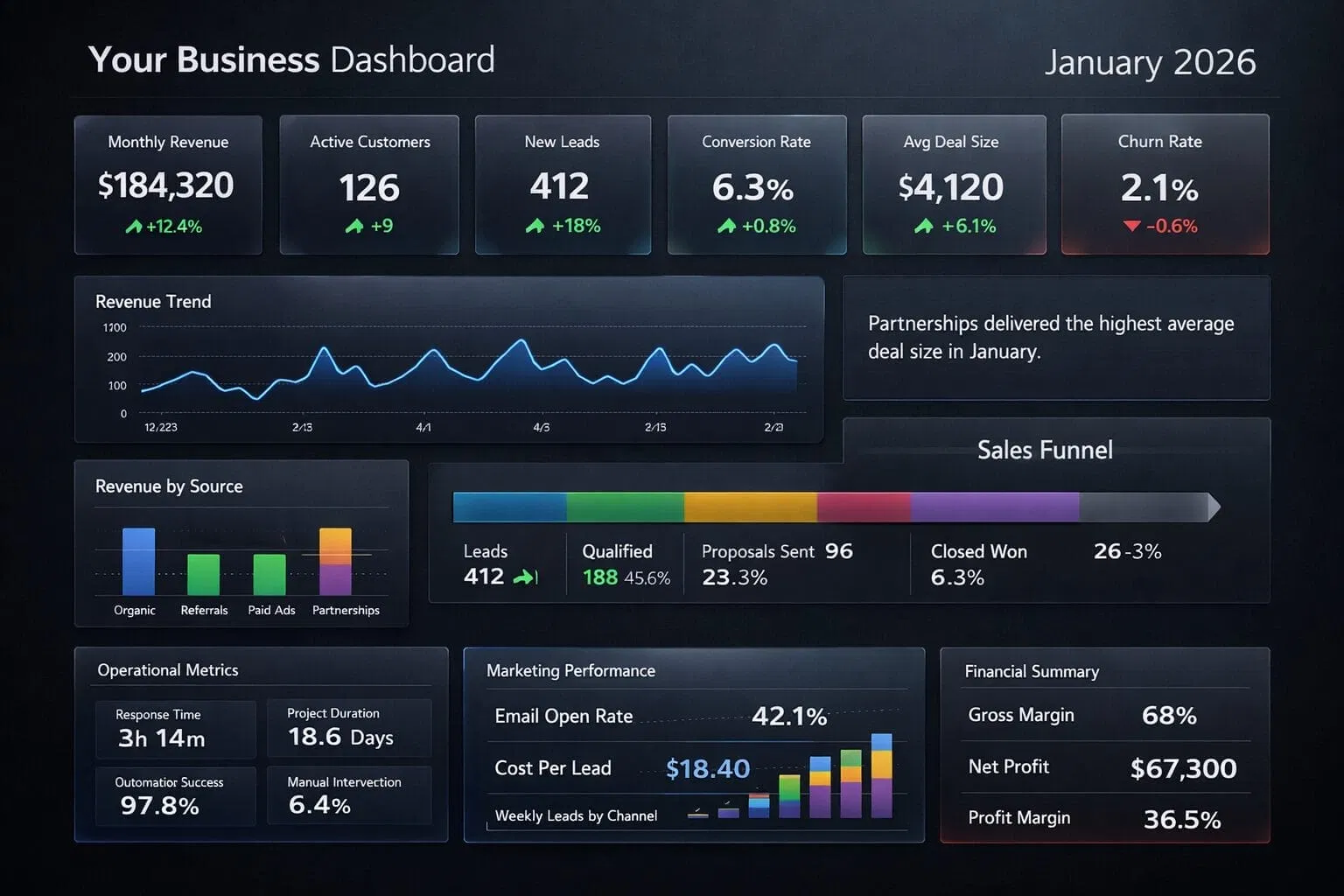
- Airtable automation allows us to create custom interfaces for different departments: Sales sees one view, Success sees another, and the CEO sees a high-level dashboard.
- n8n automation connects these views to every other tool in the company’s stack, from LinkedIn to Stripe, without the limitations of Zapier.
This is ai automation for small business done right. It’s lean, it’s fast, and it’s powerful.
When Should You Make the Move?
Not every business needs custom software on day one. But if you recognize these signs, you are ready for automation consulting:
- "System Fragmentation": Your team spends more than 20% of their time moving data between different tools.
- "The Spreadsheet Shadow": Your team has abandoned the CRM and is running the business on "shadow" Google Sheets because the CRM is too hard to use.
- "Integration Ceiling": You want to implement ai integration services but your current CRM won't allow the deep data access required.
- "Pricing Bloat": Your monthly SaaS bill is starting to look like a full-time salary.
The Yotomations Edge
We don't just "install" software. We build systems that drive growth. Whether it’s marketing automation AI to find your next whale or a full custom software development project to replace your aging CRM, we focus on one thing: ROI.
Generic is for the average. High-growth startups don't do average.
Are you ready to stop fighting your software and start leveraging it?
Execution starts now.
Contact Yotomations today to discuss how custom software and AI automation can redefine your operations.
