
Custom Software Development Vs. Off-the-Shelf Apps: Which Is Better for Your 2026 Growth Strategy?
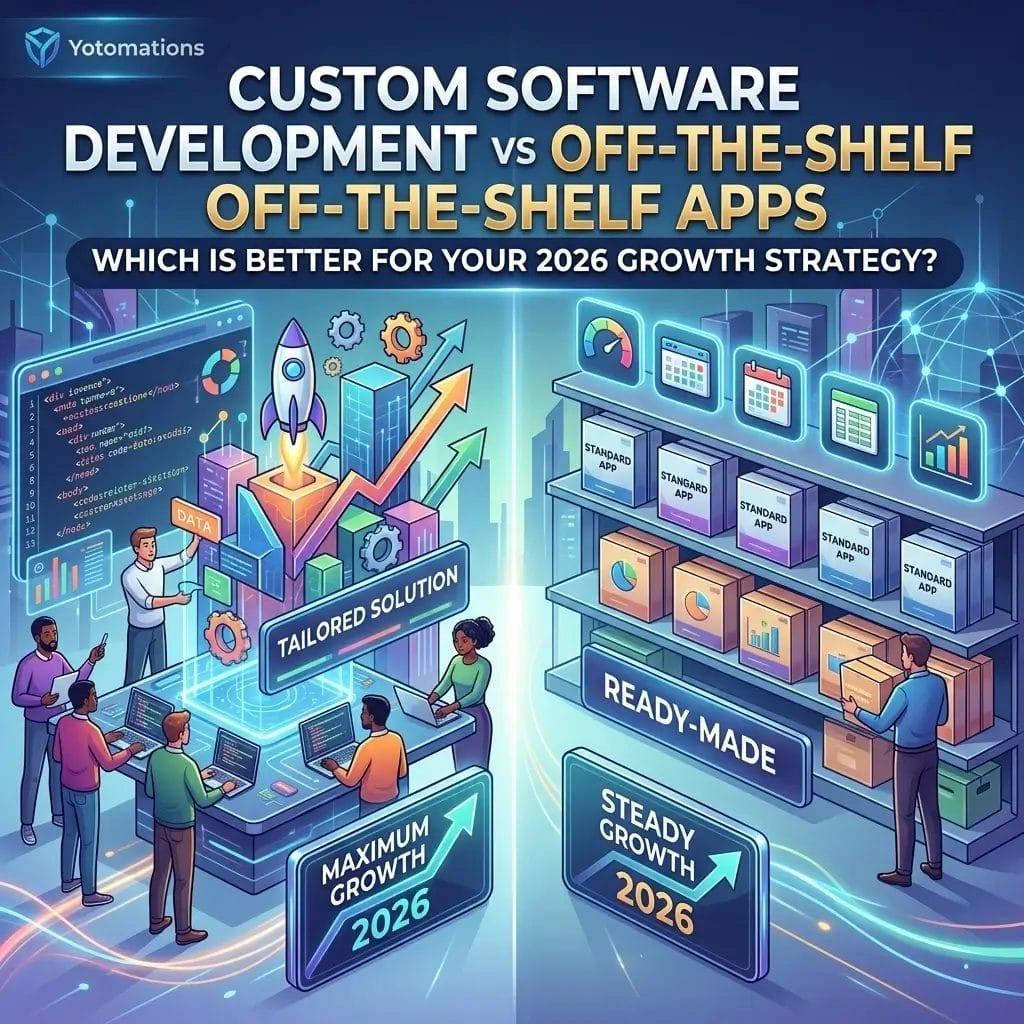
Growth in 2026 looks different than it did three years ago. The market is saturated with "ready-to-use" applications promising instant results. Yet, many small to medium businesses (SMBs) find themselves trapped in a cycle of subscription fees and limited functionality.
The choice between custom software development and off-the-shelf apps is no longer just a technical decision. It is a strategic one. Do you want to fit your business into a pre-built box, or do you want a system that scales with your ambition?
At Yotomations, we see it every day. Founders spend thousands on a SaaS stack only to realize their data is siloed and their processes are broken. To automate business processes effectively, you need more than just another login. You need a foundation.
The Off-the-Shelf Trap: Speed vs. Substance
Off-the-shelf applications are tempting. You sign up, pay the monthly fee, and you’re "live" in ten minutes. For generic tasks, like basic email or simple project management, this works. But for a growth-focused SMB in 2026, "standard" is the enemy of "superior."
When you use the same software as all your competitors, you operate exactly like them. There is no competitive moat. You are restricted by the vendor’s roadmap. If you need a specific feature to automate business processes in a unique way, you’re stuck waiting for a feature request that may never come.
The Customization Tax.
Most off-the-shelf apps claim to be flexible. They aren't. As you grow, you begin paying what we call the "customization tax." This isn't a line item on an invoice. It’s the cost of hours spent building workarounds, the cost of data entry errors because two apps won't talk to each other, and the cost of hiring "experts" to duct-tape systems together.
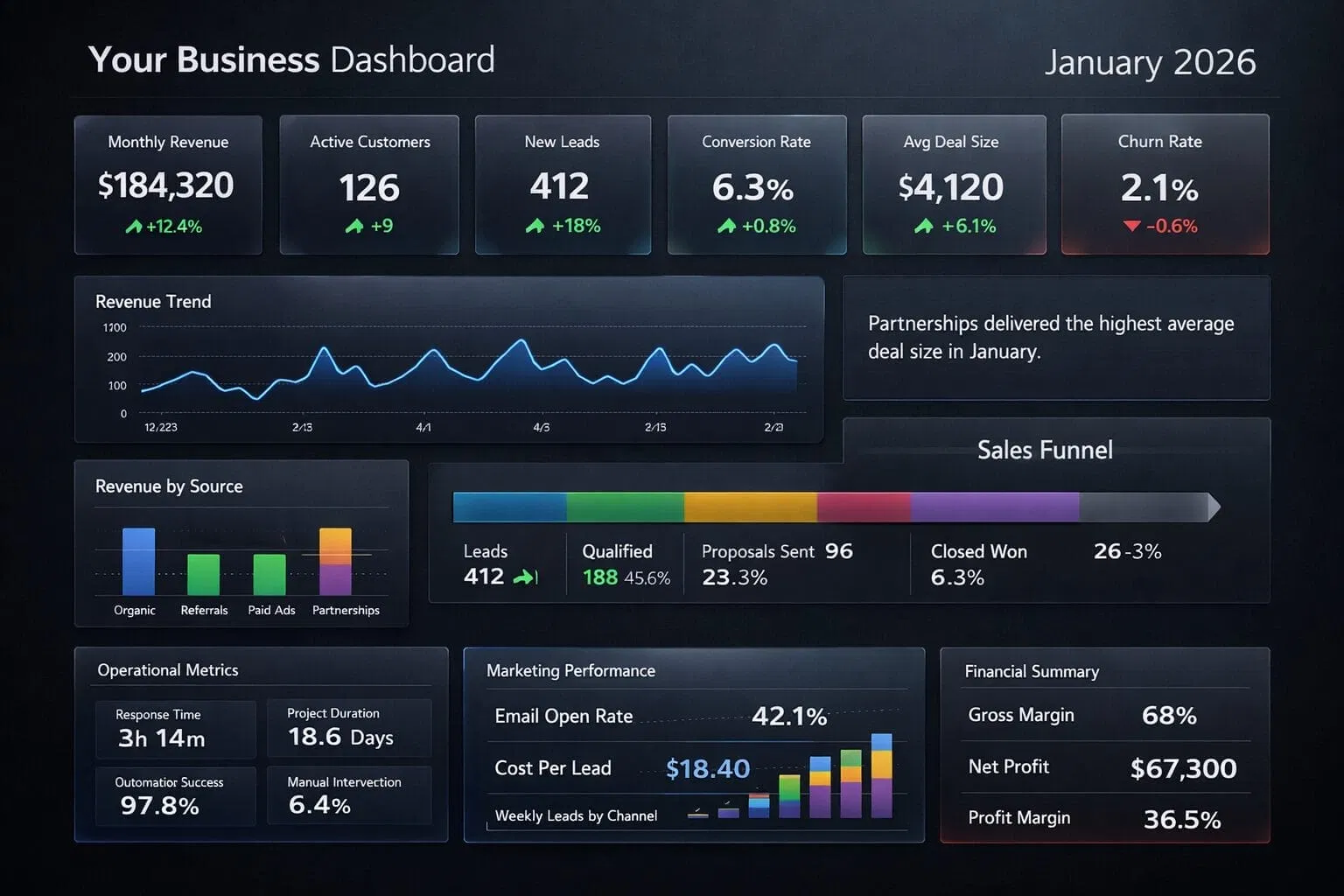
Why Custom Software Development is the 2026 Power Move
In 2026, custom software development has become more accessible and more powerful due to advancements in AI-assisted coding and modular architecture. It’s no longer just for Fortune 500 companies.
1. Owning the Logic
When we build custom solutions at Yotomations, we aren't just writing code. We are codifying your "secret sauce." If your business thrives on a specific customer onboarding flow, custom software ensures that flow is followed perfectly every time. You own the logic. You own the data.
2. Seamless AI Integration
Generic apps are adding AI features, but they are often "wrappers" that don't understand your specific business context. AI integration services for custom platforms allow you to build proprietary models that learn from your data, not the industry average. This is how you achieve true marketing automation AI that actually converts.
3. Scalability Without Friction
Off-the-shelf apps usually have "tiers." As soon as you hit a certain number of users or records, your price jumps significantly. Custom software is a capital investment that scales with you. Your costs remain predictable while your capability expands.

The Middle Ground: The "Hybrid" Automation Strategy
It’s not always an "either/or" situation. Many successful SMBs utilize a hybrid approach. They use best-in-class tools for standard functions but tie them together with workflow automation and custom middleware.
This is where tools like n8n automation and Airtable automation change the game. Instead of building a 100% custom CRM from scratch, you might use a flexible database and build custom automation layers on top of it.
- Airtable Automation: Use it as your flexible data engine. It’s more than a spreadsheet; it’s the backbone of your business automation.
- n8n and Make: These platforms act as the nervous system, moving data between your custom apps and your legacy systems.
By leveraging automation consulting, you can identify which parts of your business need the "bespoke" treatment and which can survive on standardized tools.
Total Cost of Ownership (TCO): The Real Numbers
Let’s talk about the money. CEOs often look at the $50,000 price tag for custom dev and compare it to a $200/month SaaS fee. That’s a mistake.
Over a three-year period, the "cheap" SaaS solution often becomes more expensive. Why?
- Licensing Inflation: SaaS companies raise prices annually.
- Integration Costs: Hiring developers to fix broken API connections.
- Opportunity Cost: The revenue lost because your system couldn't handle a specific high-value workflow.
Custom software development is an asset on your balance sheet. Off-the-shelf software is an ongoing liability. For a company focused on small business growth, investing in an asset is almost always the smarter move.
2026 Trend: The Rise of the Autonomous SMB
The goal of business process automation in 2026 is to reach a "zero-touch" state for routine operations. Off-the-shelf apps are designed for human interaction, you still have to click buttons and move sliders.
AI automation for small business focuses on removing the human from the loop. Custom software allows you to build agents that work 24/7. Whether it's managing inventory, qualifying leads via marketing automation AI, or generating financial reports, a custom-built environment is the only place where these agents can truly thrive.
How to Decide? The 2026 Growth Checklist
Yaakov (Koby) Oranski often tells clients: "If the process is common, buy it. If the process is unique, build it."
Ask yourself these four questions:
- Is this process a competitive advantage? If yes, build custom.
- Does my team spend more than 5 hours a week 'fighting' our current tools? If yes, you need workflow automation or custom dev.
- Do I need my data to be truly private and accessible? If yes, own the stack.
- Is my growth capped by my software’s limitations? If yes, it’s time to move beyond off-the-shelf.
Execution: How to Start Without the Headache
You don't need to replace your entire tech stack overnight. The best way to transition is through incremental AI innovation.
Start by identifying the single biggest bottleneck in your current workflow automation. Is it lead intake? Is it project handoffs? Build a custom module for that specific pain point. Integrate it with your current tools using n8n automation.
As that module proves its ROI, you expand. This "Modular Custom" approach reduces risk while maximizing the impact of your ai integration services.

The Yotomations Perspective
We aren't just developers; we are architects of efficiency. In 2026, the gap between the leaders and the laggards is defined by their tech stack. Those who rely on "good enough" off-the-shelf apps will find themselves outpaced by those who leverage custom software development to move faster, smarter, and with higher margins.
If you are tired of software that slows you down, it's time to build something that actually works for you.
Ready to own your growth strategy?
Explore our portfolio to see how we’ve transformed businesses through intelligent automation and custom builds. From AI-driven fitness platforms to complex workflow CRM systems, we build the tools that define the future.
Don't settle for off-the-shelf. Build your moat. Simplify, Automate, Thrive.
